I recently introduced you to Teri Ijeoma, a former assistant principal who burned out, found trading almost by accident, and used it to pay off seventeen thousand dollars in seminary debt in sixty days, the exact size of debt many of you are carrying from a dermatology certificate program right now. Trading might not be your path. That's fine. What matters is that you have a path, and that you start it with real tools instead of guesswork.
Article #200 - As my gift to thank you for all your support and because we know nurses LOVE a good checklist, we created one just for you. You can download Your Financial Literacy Digital Starter Kit checklist HERE.
Your Financial Literacy Digital Starter Kit
But before any tool works, you need four things in place first.
Start with mindset. Financial literacy doesn't begin with a brokerage app. It begins with believing you're allowed to have money work for you, not just work for money. Most of us were never taught that belief was optional, let alone that we could choose it.
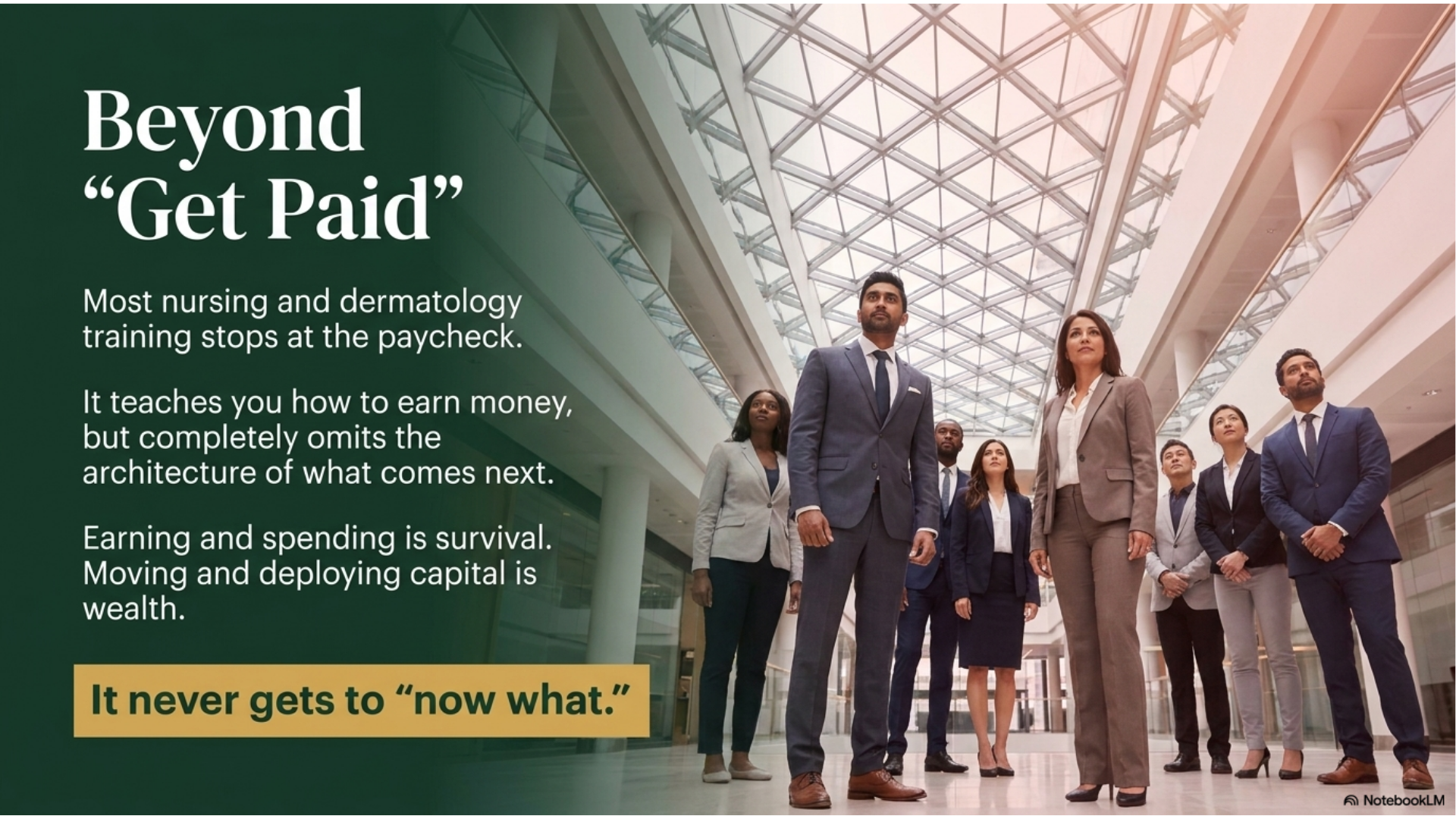
Then, understand what you can actually do with money. Not just earn it and spend it, but move it. Save it, protect it, grow it, deploy it into something else. Most nursing and dermatology training stops at "get paid." It never gets to "now what."
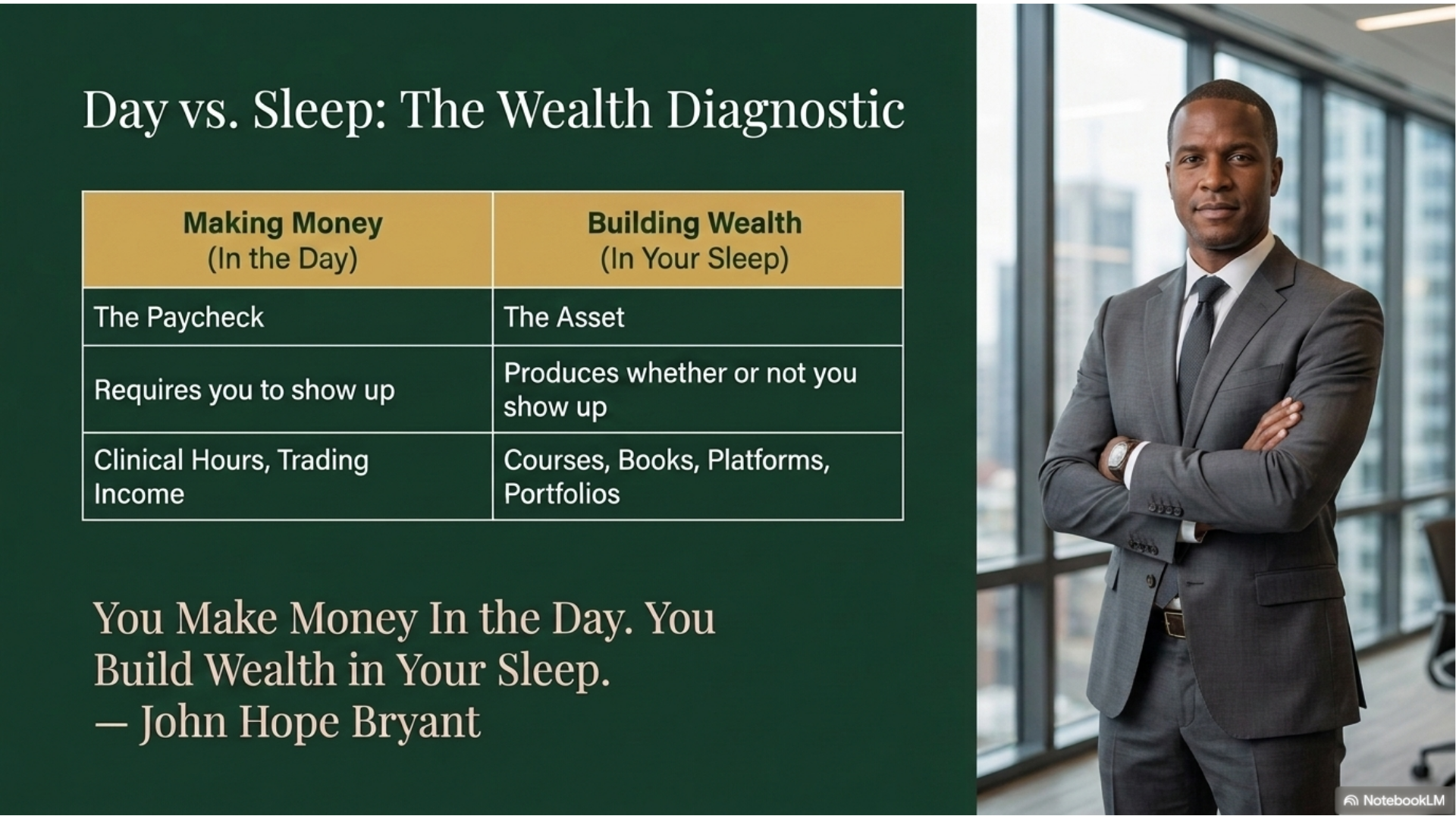
That leads straight into the difference between making money and building wealth. Making money is the paycheck. Wealth is what's still standing after the paycheck stops, the assets, the investments, the things that keep producing whether or not you show up to work that day. Teri's seventeen thousand dollars in trading income made her money. What she built after, the course, the book, the platform, that's wealth.
You Make Money In the Day. You Build Wealth in Your Sleep. - John Hope Bryant
Then there's your relationship with money, which is the piece most of us skip entirely. What you watched your family do with money, what you were praised or shamed for around money, what you're still quietly afraid of when it comes to money. I'll share mine next time. For now, just start noticing yours.
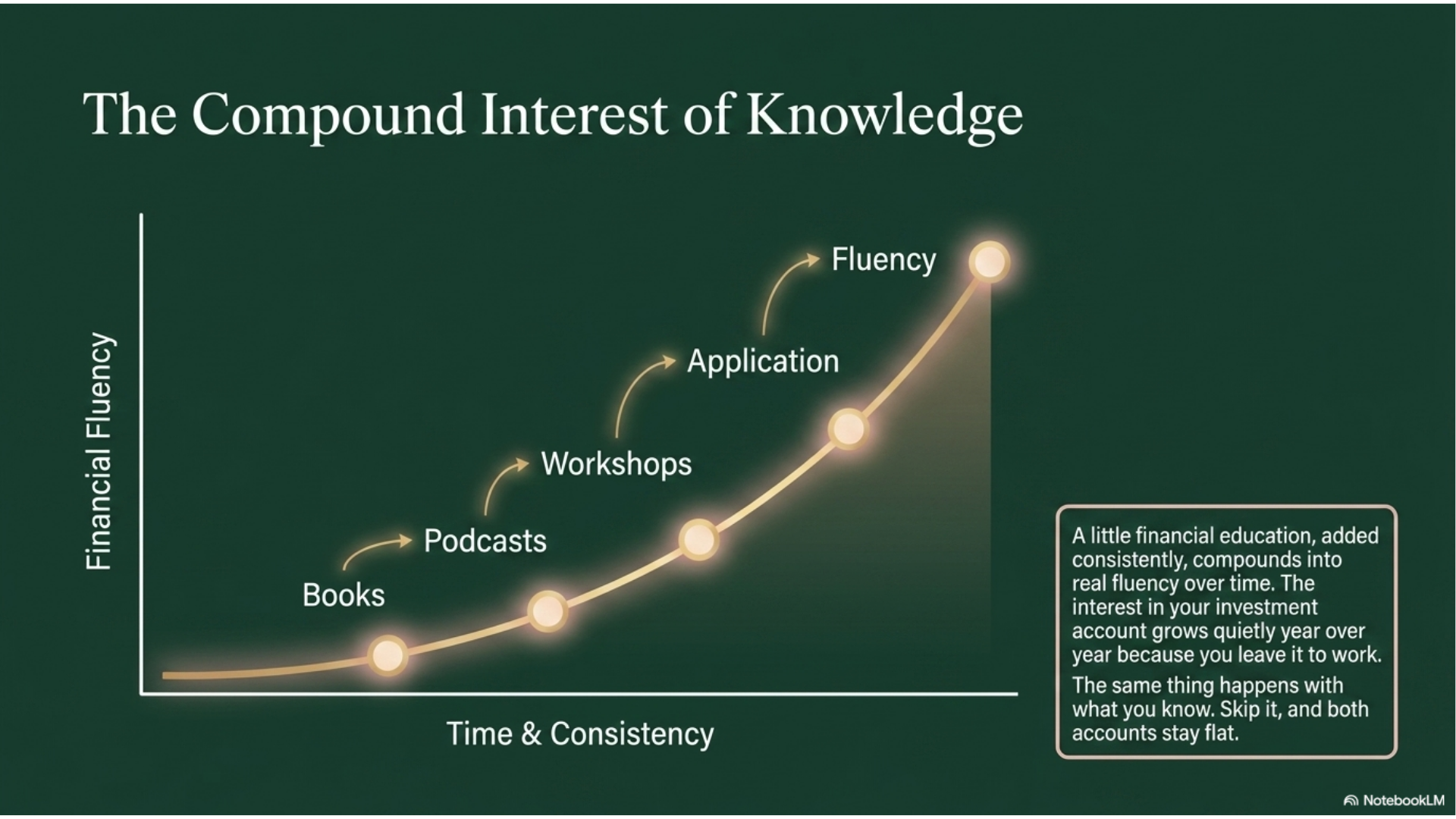
And last, the habit that ties all of it together: consistently learning and listening. This is the one piece of financial literacy that behaves exactly like compound interest. The interest in your investment account grows quietly, year over year, because you left it alone to work. The same thing happens with what you know. A little financial education, added consistently, compounds into real fluency over time. Skip it, and both accounts stay flat.
So this week, I've combined my recommended resources and Teri's tools. It's about the resources I actually point people to when they tell me they don't know where to begin, and the ones that keep my own financial literacy compounding.
Books
Cash Flow Quadrantby Robert Kiyosaki. This is the clearest explanation you'll find of the four ways money actually moves into a life, employee, self-employed, business owner, investor, and why most of us were only ever taught the first one.
You Deserve to Be Richby Rashad Bilal and Troy Millings, the founders of Earn Your Leisure. It comes from two men who built their own financial literacy platform from nothing and understand exactly what it feels like to grow up believing hard work alone was supposed to be enough.
Financial Literacy for Allby John Hope Bryant, the same voice behind Money and Wealth. He founded Operation HOPE, which has served more than 4 million people and directed more than $4.2 billion in economic activity into underserved communities since 1992. He was also Vice-Chairman of the U.S. President's Advisory Council on Financial Literacy, and he's said on his own podcast that he built The Promise Homes Company, the largest minority-controlled owner of single-family rental homes in the country, from zero to about $150 million in market value before selling it in 2021. This book is his case for why financial literacy has to become a civil rights issue, not just a personal finance one.
Our own MONEY playlist on the Kimberly Madison DNP YouTube channel is the free, ongoing version of everything we teach here, covering the financial literacy foundation that nursing school, dermatology training, and cosmetic training all skip.
Beyond our own channel, these are the people worth following, on YouTube, in your podcast app, or both.
The EliteNP, hosted by Justin, is one-on-one interviews (consultations)with NPs building and scaling their own cash-based and hybrid practices, real conversations about pricing, staffing, and the mindset shifts that come with trading employee for owner.
Earn Your Leisure, the platform Rashad Bilal and Troy Millings built out of a podcast between two friends into one of the largest financial media platforms serving our community, over 50 million downloads and more than a million YouTube subscribers. This is where You Deserve to Be Rich came from. The videos during the pandemic were gold! If you have time, start there.
Ian Dunlap, known as The Master Investor, Earn Your Leisure's longtime partner on Market Mondays and founder of Red Panda Academy, his own investing education platform.
Myron Golden, my own first sales coach, who teaches business and money principles through a biblical lens most financial content never touches. He's also the author of From the Trash Man to the Cash Man, his own rags-to-riches story.
Black Girl Stocks, run by Shayla North, who left a traditional 9-to-5 to trade full time and now breaks down stocks and options trading in simple, beginner-friendly terms.
Wallstreet Trapper, Leon Howard's channel built on the philosophy of "From the Trap to Wallstreet," teaching stock and options investing to a community that was never handed a seat at the table.
How I Built This with Guy Raz, from NPR, for the early, unglamorous version of building something from brands you know and love.
Money and Wealthwith John Hope Bryant, for the same straight talk on wealth mindset you'll find in his book.
Teri Ijeoma, whose free webinar walks through the exact building blocks of options trading in real time, using real trades she's actually taken. Watch it here. This is the BEST way I've heard Options explained. Her teaching style, relatability, and analogies will have you believing you can really trade stocks as a way to generate an additional stream of income for the life you want to live right now, not at retirement.
Investopedia
When someone throws out a term like strike price or premium, or when a CPA mentions a Solo 401(k) you've never heard of, Investopedia is where you go to get the plain definition without an agenda attached. It's not going to tell you what to do with your money. It will make sure you understand the words being used while you decide.
The Mahogany Dermatology Nursing Bookstore
This is where the deeper, structured work lives. The Cosmetic NP Financial Literacy E-book Series is four quarterly guides, aligned to what you should actually be doing that quarter.
Q1: The Money Workbook covers foundation and tax prep, the accounts you need and how to walk into tax season prepared instead of scrambling.
Q2: Business Structure & Growth Audit covers scaling smart, from LLC decisions to hiring your first employee.
Q3: Investment & Wealth-Building Playbook covers making your money work, retirement accounts, and your first steps into the market.
Q4: Year-End Planning & Legacy Guide covers closing out the year and building something that lasts past you.
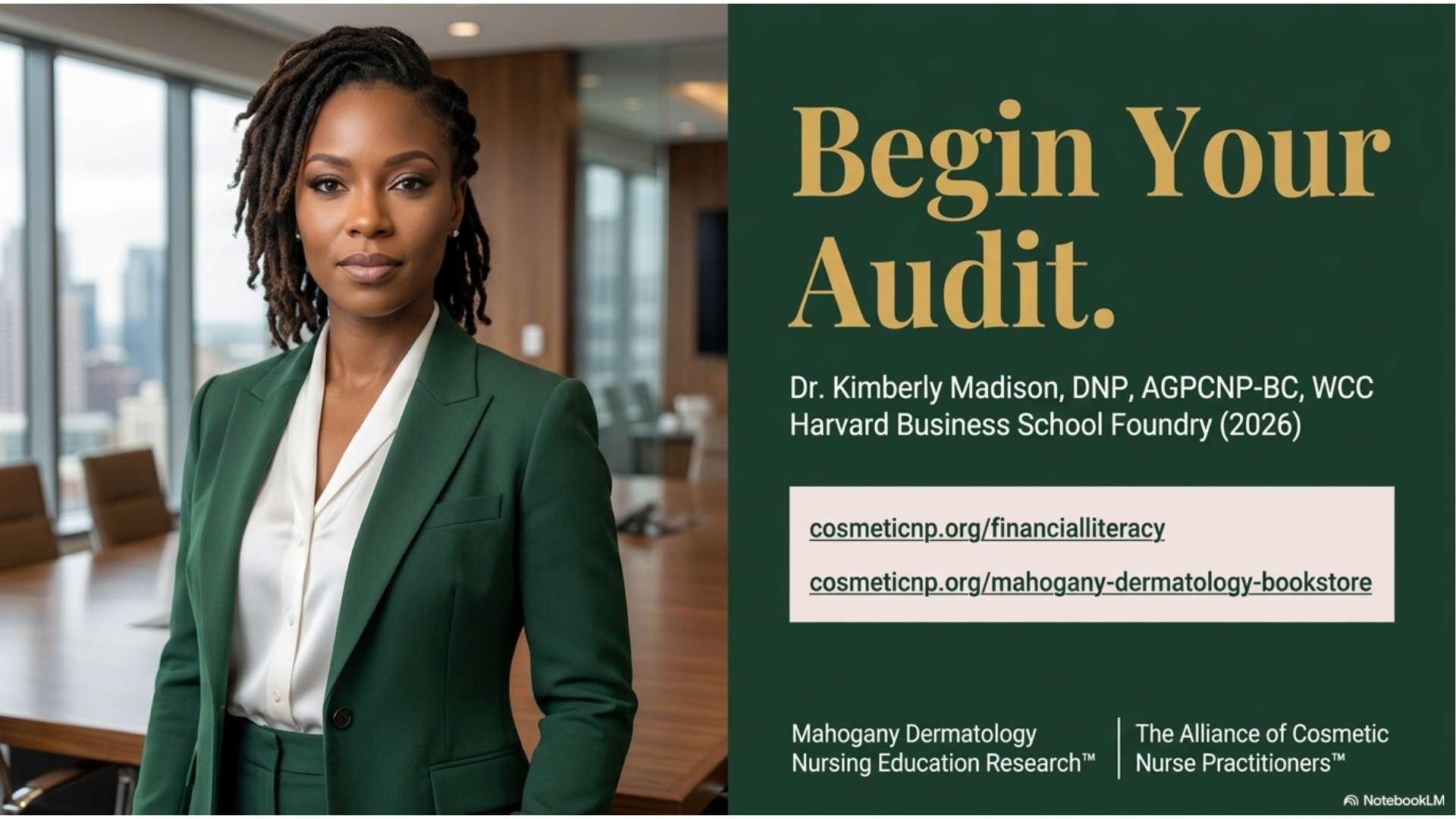
This is the piece that ties the whole kit together. It lays out financial literacy the way we already think about patient care: assessment, diagnosis, plan of care, and evaluation, except the patient is your own financial picture. The checklist inside is meant to be worked through once, on paper, before you touch a single account or app. Know where you stand before you decide where you're going. Read it at cosmeticnp.org/financialliteracy.
Use the Kit the Way You'd Use Any Clinical Reference
None of these five things replace each other, and none of them are optional if you're serious about closing this gap. The books build your foundation. The people you watch and listen to show you real breakdowns in real time, and the unglamorous version of building something. Investopedia gives you the vocabulary. The bookstore gives you the structured plan. The whitepaper tells you where to start. That's the kit. Regardless of whether your path looks like Teri's, like mine, or like something else entirely, you now have a concrete first step.
Article #200
One more thing before I let you go. This is article two hundred. Article one hundred was about AI and where dermatology is headed. This one is about money and where you're headed. Different topic, same thread: showing up consistently until it compounds into something real. I said back then that the journey is the destination, and two hundred articles in, I believe that more than I did at one hundred. If you've been here since the beginning, you already know what compound interest looks like from the inside, because you've lived it with me. If this is your first one, welcome to the middle of a very long game.
Next week: understanding your relationship with money, and why the number in your account was never the whole story.
About the Author
Dr. Kimberly Madison, DNP, AGPCNP-BC, WCC is a Board-Certified, Doctorally-prepared Nurse Practitioner, educator, researcher, and author dedicated to advancing dermatology nursing education with an emphasis on skin of color, business acumen, and digital literacy. She is the founder of Mahogany Dermatology Nursing | Education | Research™ and the Alliance of Cosmetic Nurse Practitioners™, the first dermatology nursing organization in the country built at the intersection of clinical excellence, skin of color care, and financial literacy for nurses. A selected participant in the Harvard Business School Foundry Mindset Bootcamp (2026), Dr. Madison continues to sharpen the entrepreneurial infrastructure behind her mission. Through peer-reviewed research, published books, and a growing community of nurse entrepreneurs, Dr. Madison is building the infrastructure that makes this profession sustainable for the people who choose it.
.svg)

.svg)
.svg)