What NPs Need to Know About the New Severe Alopecia Areata Treatment Consensus
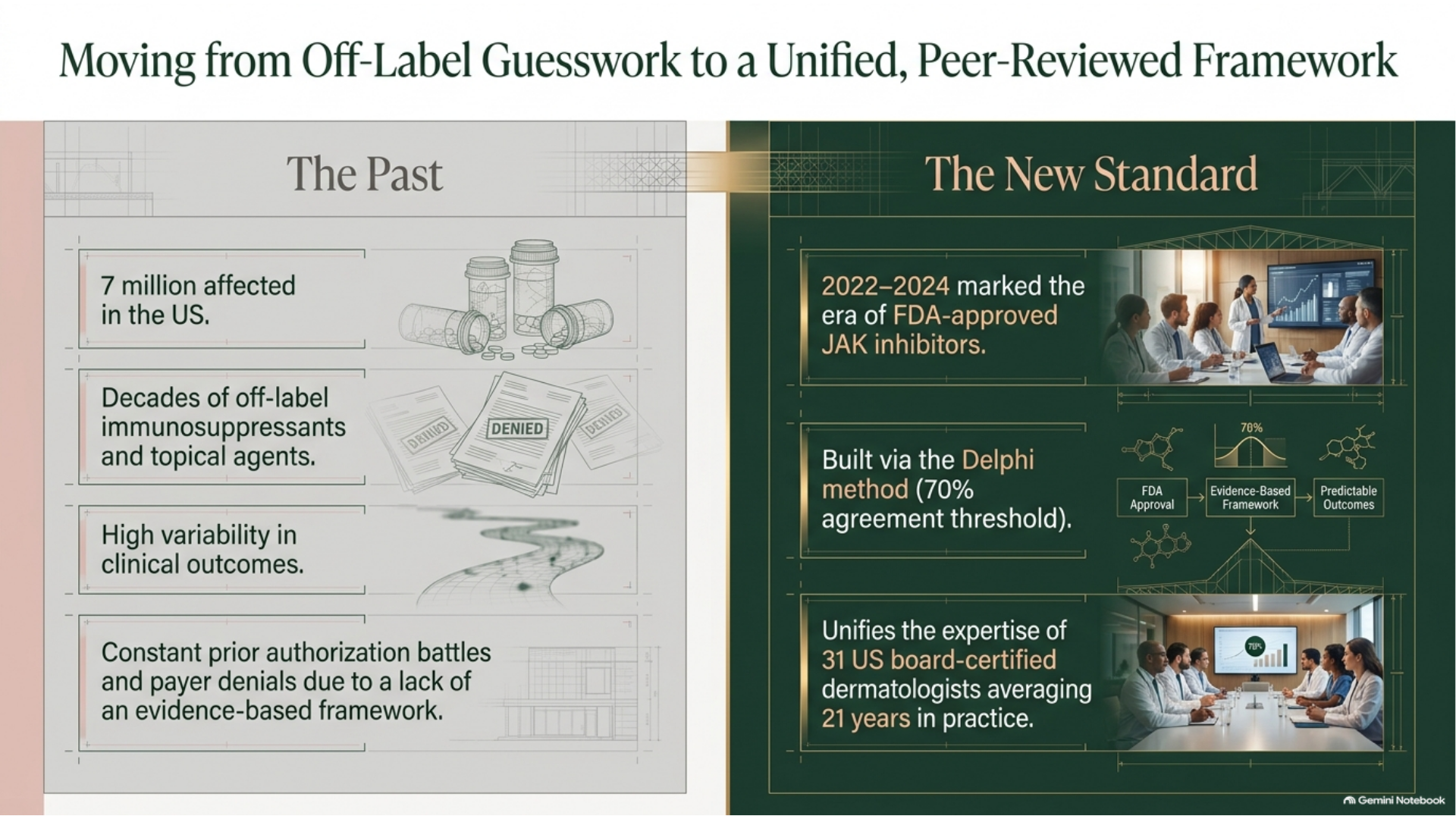
When you see the Past President of the American Academy of Dermatology and the founder of the Skin of Color Society publish a new article along with some of your favorite dermatologists on alopecia, you have to read it! Congratulations to Drs. Crystal Aguh, MD; Valerie D. Callender, MD; Chesahna Kindred, MD, MBA; Amy McMichael, MD; Jennifer Soung, MD; and the one and only Dr. Susan Taylor, alongside 25 other leading dermatologists, on the publication of the first standardized US treatment consensus for severe alopecia areata (AA) in JAMA Dermatology. Alopecia areata affects more than 7 million people in the United States. For decades, treatment meant piecing together off-label options with wide variation in outcomes and even wider variation in insurance coverage. In 2022, baricitinib became the first FDA-approved treatment for severe AA, followed by ritlecitinib in 2023 and deuruxolitinib in 2024. These tools needed a shared framework for how to use them together. That framework now exists. This article breaks down what the consensus establishes, what it excludes, and what it means for how we counsel, treat, and advocate for our patients with severe AA.
Background and Significance
Alopecia areata is a chronic autoimmune, nonscarring hair loss condition with a course that ranges from a single patch to complete loss of scalp, facial, and body hair. Before 2022, no treatment carried FDA approval for AA. Clinicians relied on off-label immunosuppressants, corticosteroids, and topical agents with limited and inconsistent evidence behind them. That lack of standardization created two connected problems. Patients received inconsistent care depending on which clinician they saw, and payers had no evidence-based framework to justify coverage, leaving many patients to fight for access to treatments their clinicians already knew worked.
The consensus was built through the Delphi method, a structured process for reaching agreement among experts when the underlying evidence is incomplete or inconsistent. Partnering with the National Alopecia Areata Foundation and the American Hair Research Society, the study team recruited 37 US board-certified dermatologists with deep AA research and clinical experience; 31 accepted. Panelists averaged over 21 years in practice and 21 years managing AA specifically. Nearly half had published more than 10 AA-focused papers in the last five years alone. Over three rounds of anonymous surveys between May and November 2025, they voted on 29 distinct therapies, with 70% agreement required to reach consensus.
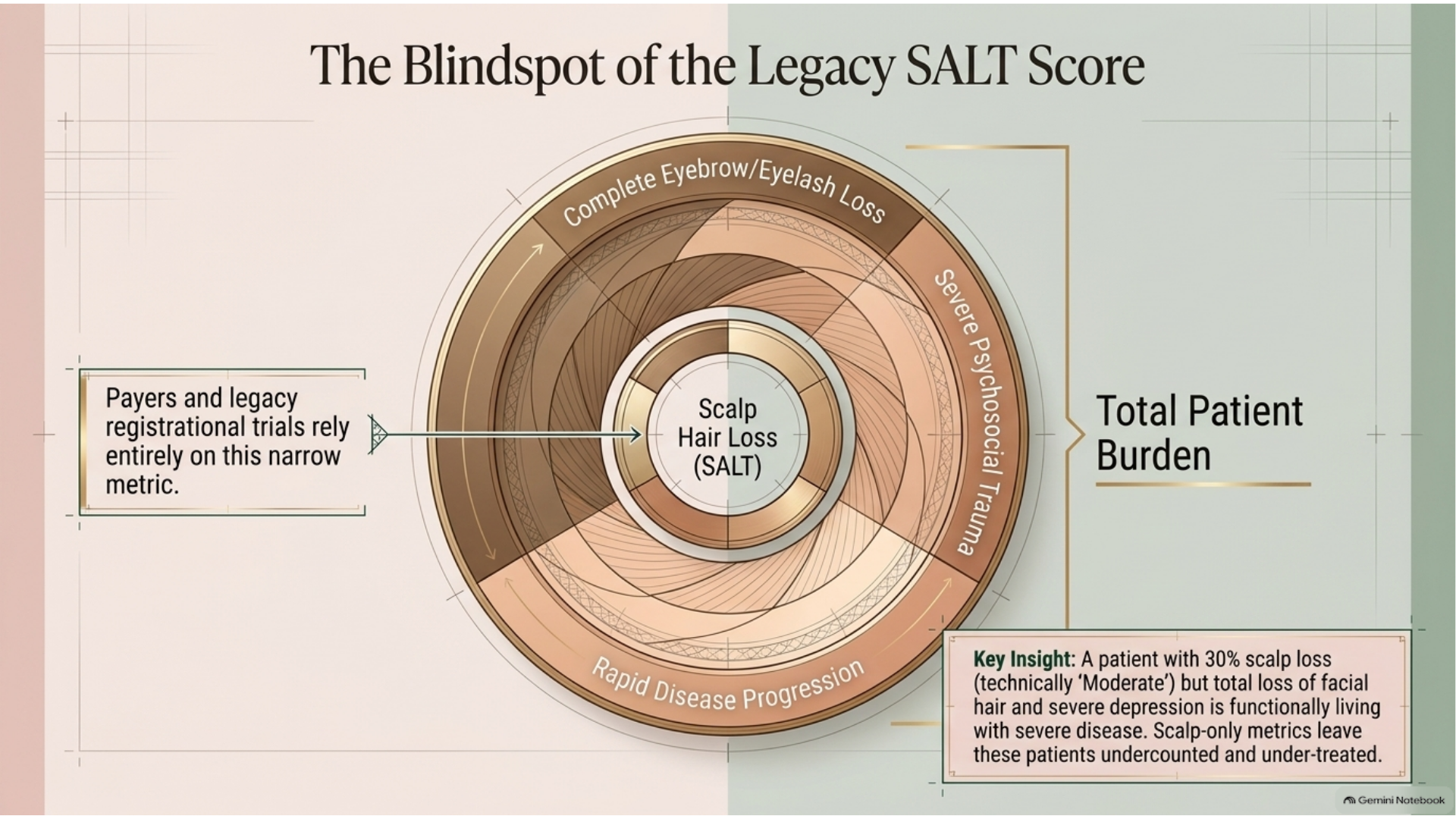
The first major contribution of this work is a new way to define severe disease. Clinical trials have historically defined AA severity by scalp hair loss percentage alone, using the Severity of Alopecia Tool. That measure misses a lot. A patient with 30% scalp involvement but complete eyebrow and eyelash loss, or a patient whose hair loss is triggering serious psychosocial distress, can be functionally living with severe disease that a scalp-only percentage does not capture.
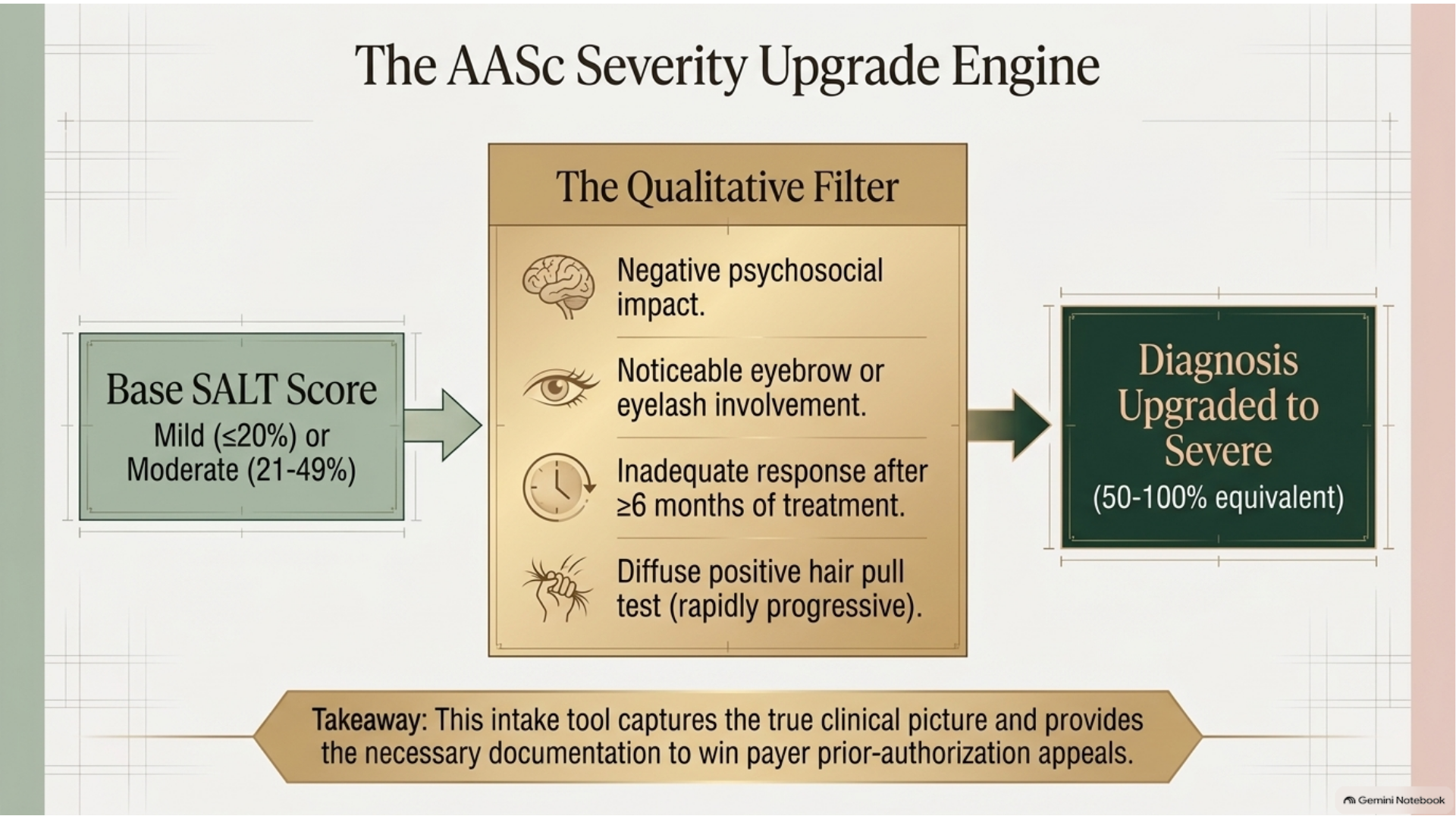
The panel adopted the Alopecia Areata Scale instead, which anchors severity to the SALT score, mild at 20% or less, moderate at 21% to 49%, and severe at 50% to 100%, but upgrades a mild or moderate rating by one full level if any of four factors are present: negative psychosocial impact, noticeable eyebrow or eyelash involvement, inadequate response after at least six months of treatment, or a diffuse positive hair pull test indicating rapidly progressive disease. This is a meaningfully more complete clinical picture, and it matters for coverage conversations because payers have largely adopted the narrower scalp-only definition used in registrational trials.
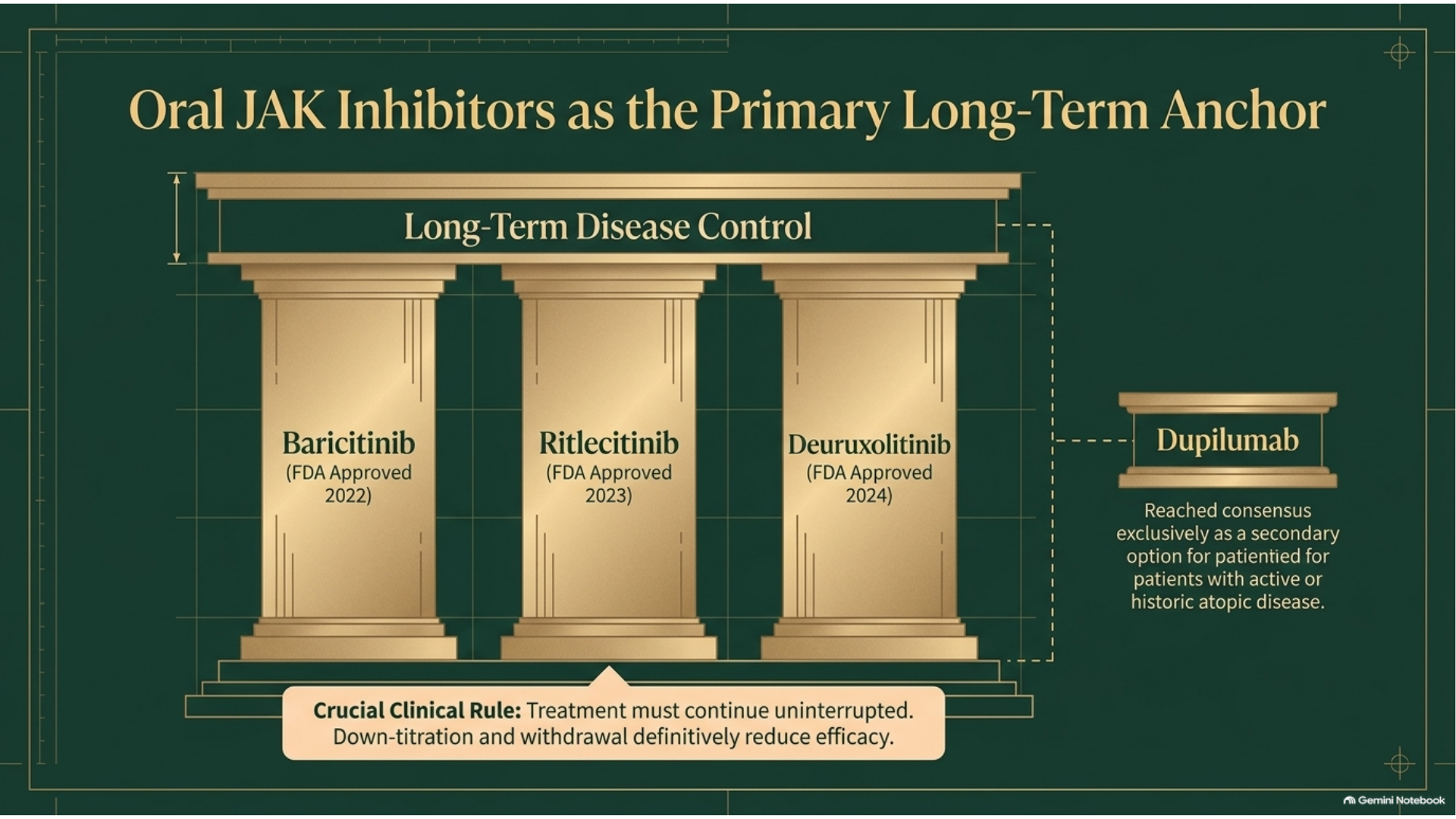
With severity defined, the panel reached consensus on treatment. Oral JAK inhibitors are now established as the primary, long-term therapy for all patients with severe AA, with FDA-approved agents preferred over off-label options given their more established safety and efficacy data with long-term use. For responders, treatment should continue uninterrupted at the same drug and dose, since down-titration and withdrawal have been shown to reduce efficacy.
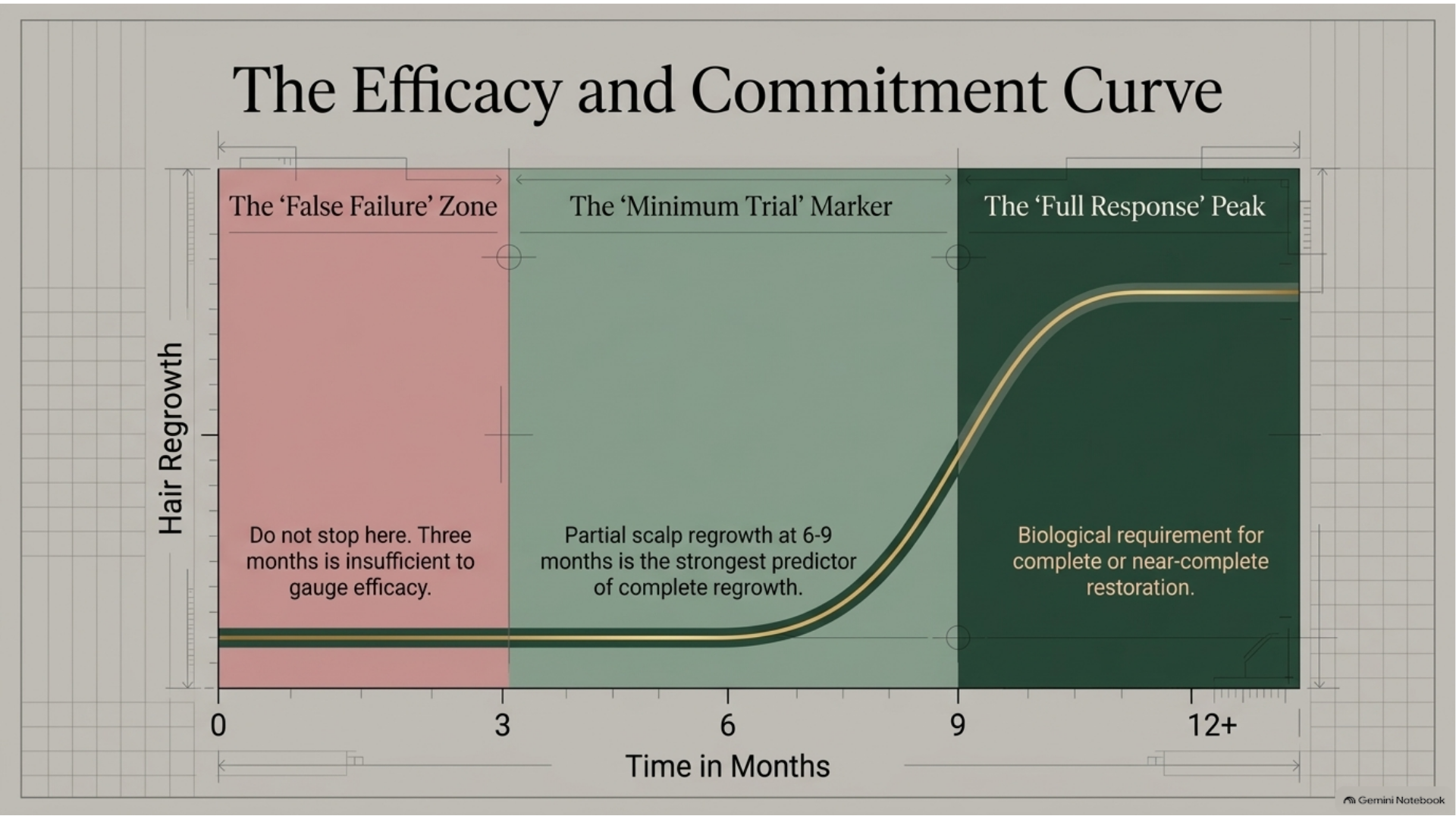
A treatment trial of at least six months is standard, extending to nine or twelve months when progress looks promising, since data show that partial scalp regrowth at six to nine months is associated with complete or near-complete regrowth by twelve months. Dupilumab reached consensus as an alternative option specifically for patients with active or historic atopic disease, though it remains secondary to JAK inhibitors given the stronger overall evidence base for the latter.
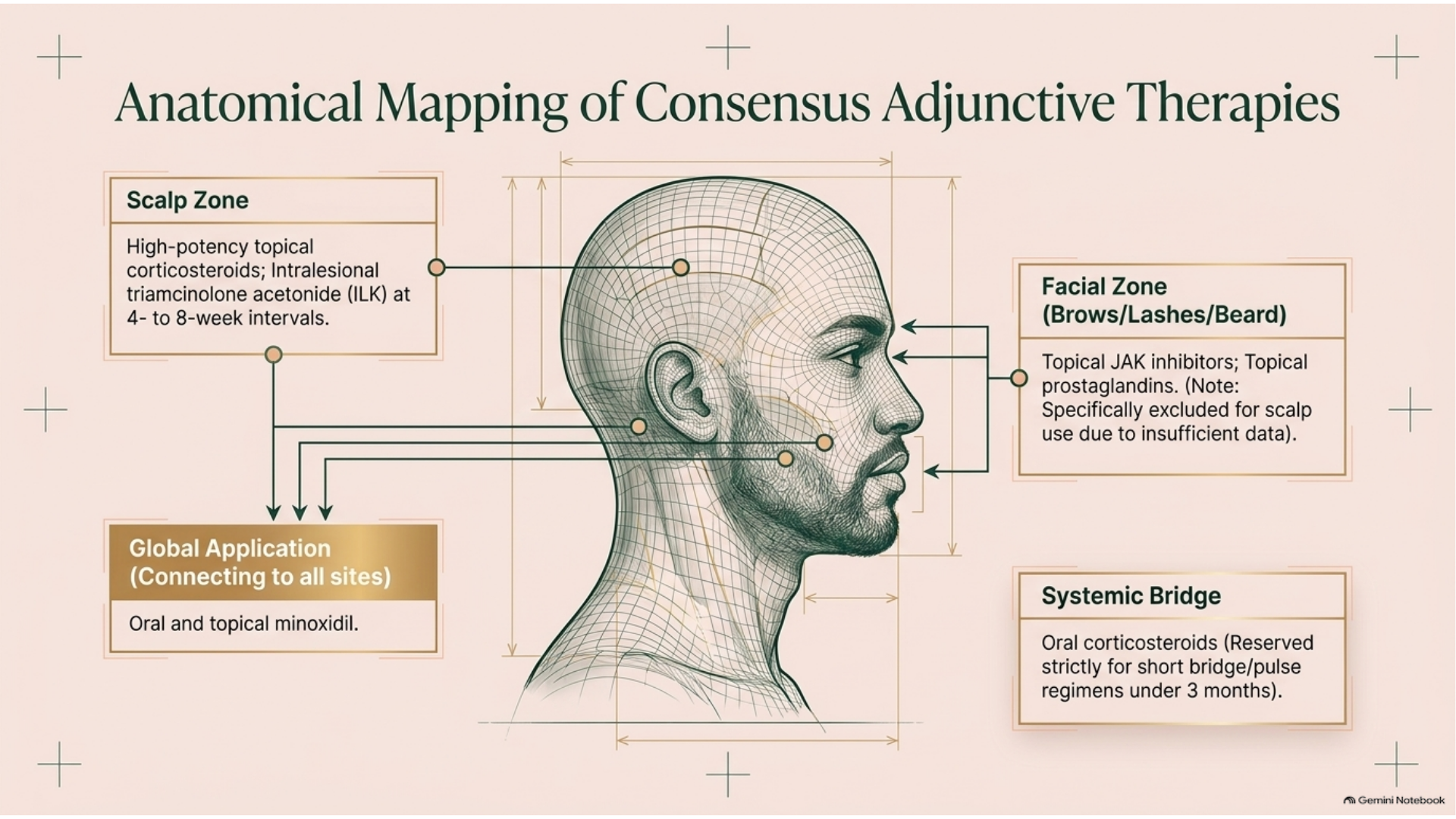
Beyond the primary therapy, the panel reached consensus on a set of adjunctive treatments, each with site-specific indications. Oral and topical minoxidil are appropriate across scalp, facial hair, eyebrows, and beard. Intralesional triamcinolone acetonide is recommended for scalp, eyebrow, and beard hair loss at 4- to 8-week intervals. High-potency topical corticosteroids are limited to scalp use, while oral corticosteroids are reserved for short bridge or pulse regimens under three months total. Topical JAK inhibitors and topical prostaglandins reached consensus for eyebrow, eyelash, and beard use, and were excluded for scalp treatment due to insufficient supporting data.
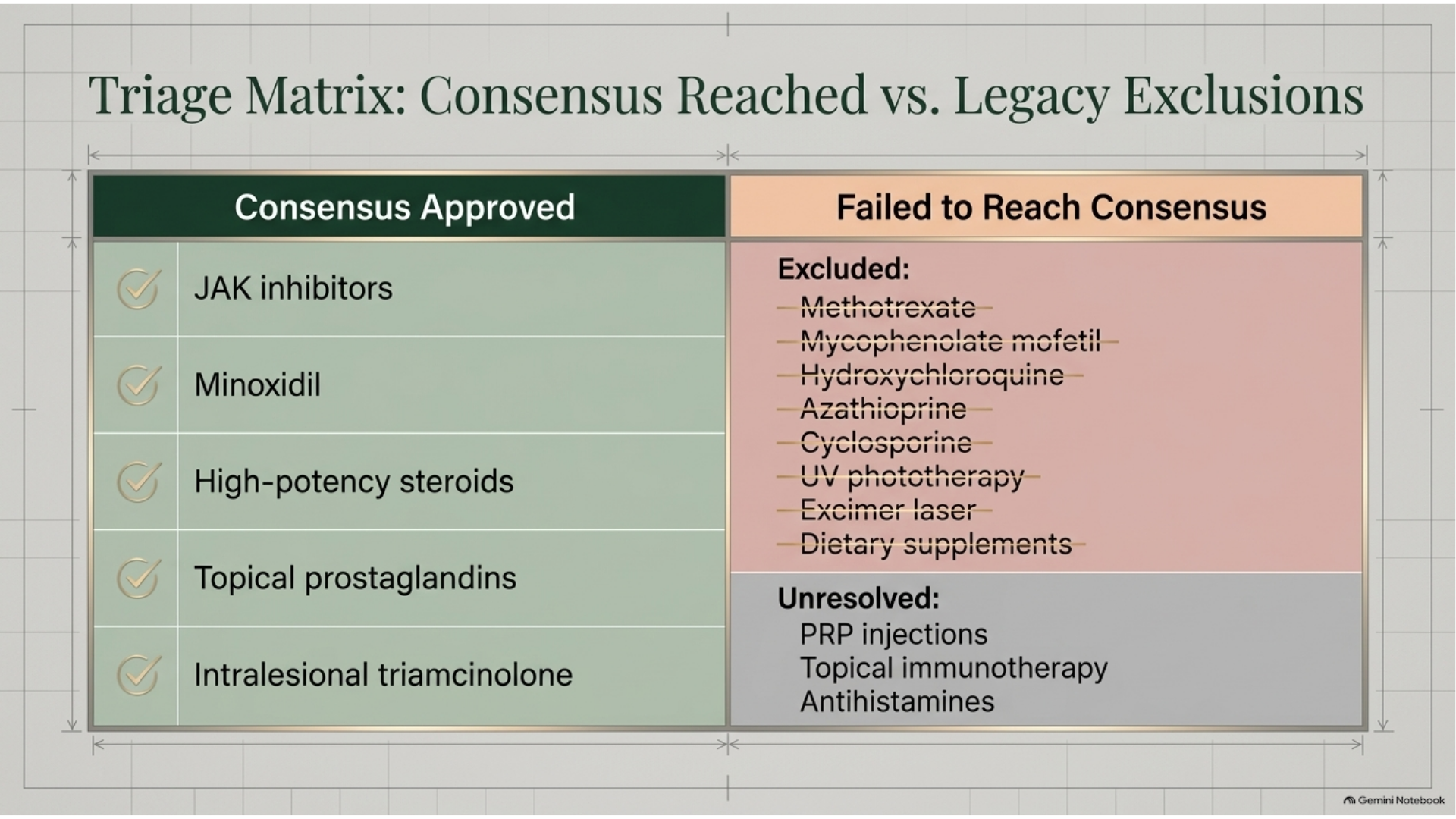
Equally important is what the panel excluded. Methotrexate, mycophenolate mofetil, hydroxychloroquine, azathioprine, cyclosporine, dietary supplements, UV phototherapy, and excimer laser therapy all failed to reach consensus for inclusion, a clear departure from some international guidelines that still list these as later-line options. Several other therapies, including topical immunotherapy, platelet-rich plasma injections, and antihistamines, failed to reach consensus in either direction and remain unresolved.
Finally, the panel built patient coping resources directly into the treatment framework as a formal part of care. Cranial prostheses and camouflage reached consensus as a legitimate primary or adjunctive option, with clinicians encouraged to write letters of medical necessity to support insurance coverage as durable medical equipment. Mental health referral and connection to patient advocacy organizations like NAAF also reached consensus as standard components of care, reflecting the well-documented link between AA and psychiatric comorbidity.
Implications for Dermatology and Aesthetic Nurse Practitioners
This consensus gives us something new: when a payer pushes back on an oral JAK inhibitor request, we now have 31 national experts and a peer-reviewed JAMA Dermatology framework behind that prescription, not just our own clinical judgment standing alone.
The Alopecia Areata Scale gives us a better intake tool. Asking about eyebrow and eyelash involvement, psychosocial impact, and prior treatment response, not just scalp percentage, means we catch patients whose disease burden has been undercounted by a scalp-only lens. That includes the patient who camouflages well but is quietly unraveling, and the patient whose six months on a topical should not have been called a failed trial of "everything."
The coping resources section belongs in our scope just as much as the prescription pad. Writing a letter of medical necessity for a cranial prosthesis, screening for the psychiatric comorbidity this population carries at elevated rates, and connecting patients to NAAF are all now consensus-level standards of care.
Clinical Pearls / Key Teaching Points for Patient Education
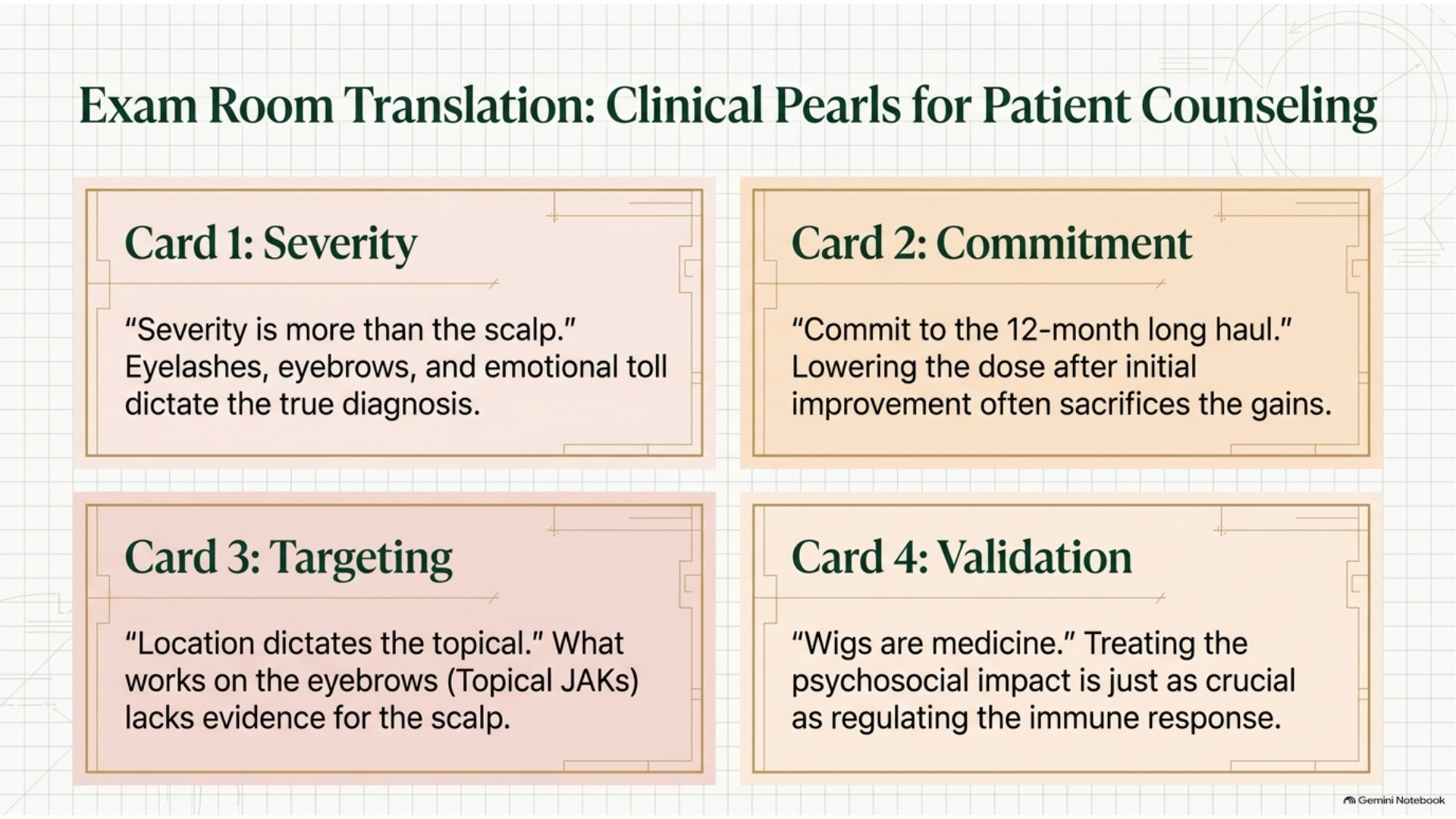
Severe alopecia areata is now defined by more than scalp hair loss. Eyebrow and eyelash involvement, emotional impact, and treatment response all factor into severity.
Oral JAK inhibitors work best as a long-term, uninterrupted commitment. Stopping or lowering the dose after improvement often means losing the gains.
Three months is not enough time to call a treatment failed. Six months is the minimum trial, and twelve months may be needed to see the full response.
Topical treatments applied to the scalp have far less evidence behind them than the same treatments applied to eyebrows, eyelashes, and beard hair.
Dupilumab fits a specific patient: someone with a history of allergies, asthma, eczema, or other atopic conditions.
A wig, topper, or camouflage product is a legitimate treatment choice. Insurance can often be billed for it as durable medical equipment.
Alopecia areata carries real mental health weight. Asking for a referral to a therapist or counselor is a normal, expected part of managing this disease.
DNP Project Ideas
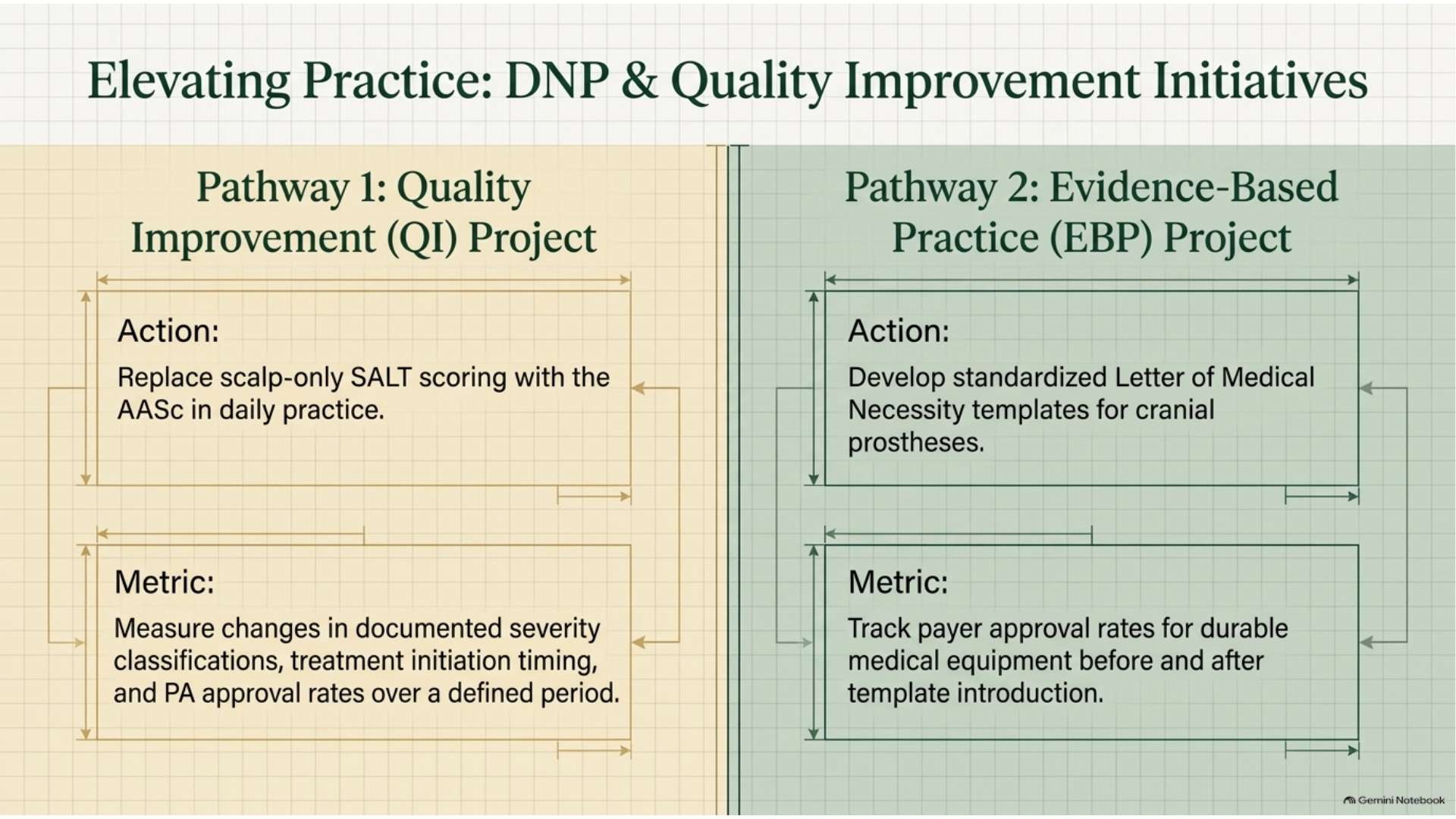
Quality Improvement (QI) Project: Implement the Alopecia Areata Scale as a standard intake and severity-tracking tool in a dermatology or aesthetics practice, replacing scalp-only SALT scoring, and measure whether it changes documented severity classification, treatment initiation timing, or insurance approval rates over a defined period.
Evidence-Based Practice (EBP) Project: Develop and implement a standardized letter-of-medical-necessity template for cranial prostheses in severe AA patients, then track prior authorization approval rates before and after the template's introduction across a patient cohort.
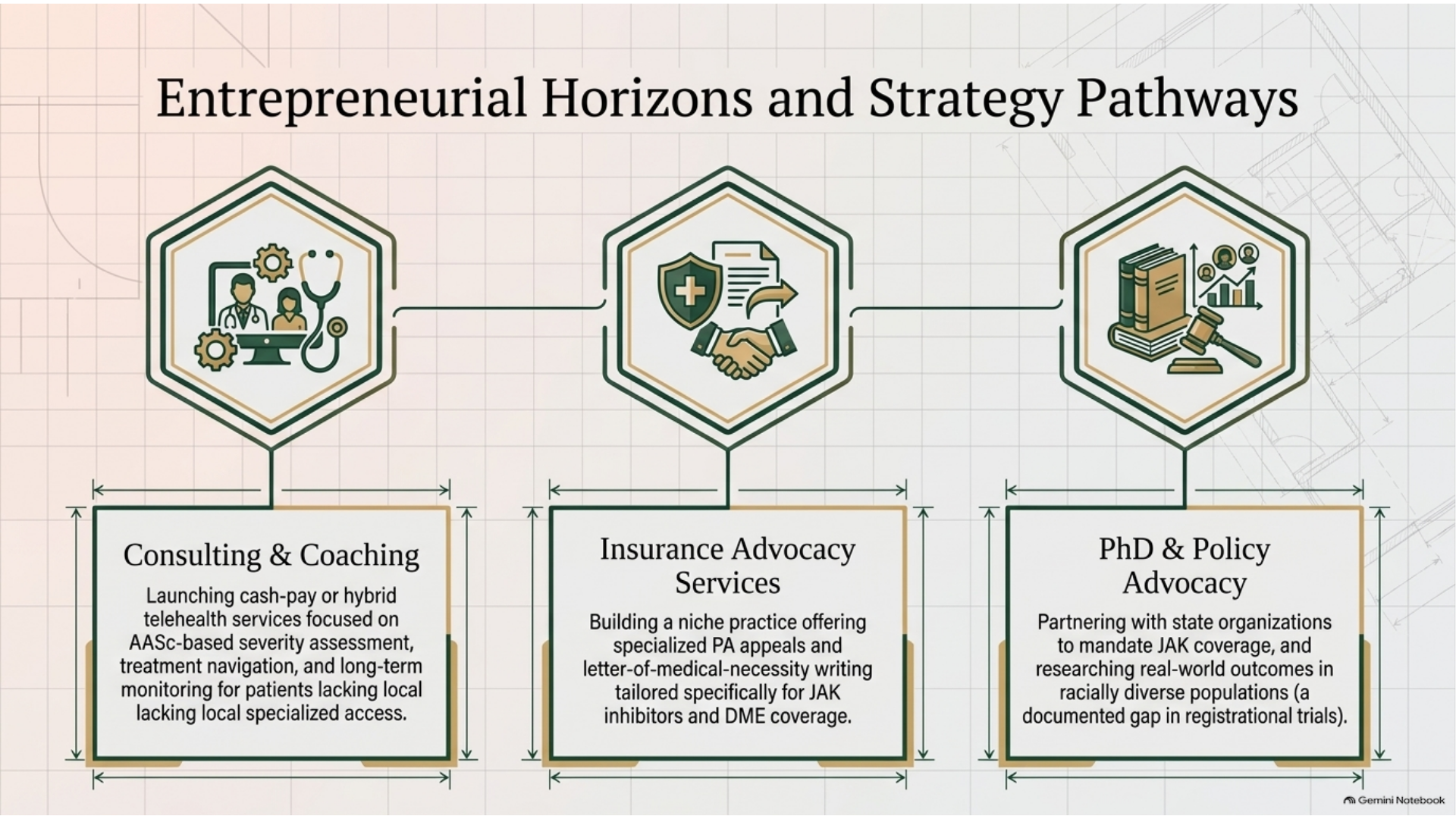
Policy-Focused Initiative: Partner with a state nursing or dermatology organization to advocate for mandated insurance coverage of FDA-approved oral JAK inhibitors as first-line severe AA therapy, using this consensus statement as the clinical evidence base for legislative or payer-facing testimony.
Step-by-Step Guide: From Idea to Implementation
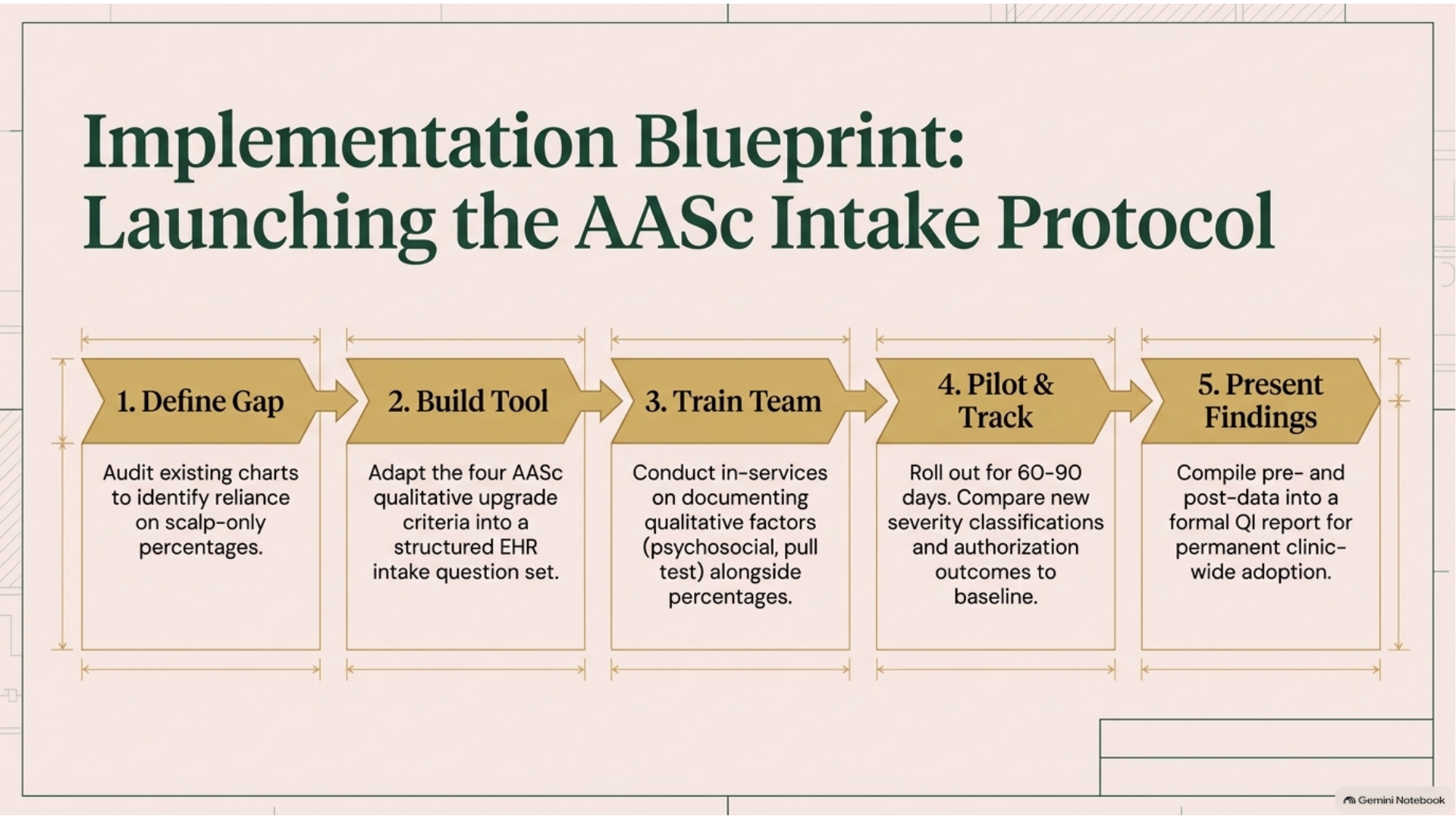
Using the AASc intake QI project as the example:
Define the current gap. Audit a sample of existing patient charts to see how severity is currently documented, and whether scalp-only percentages are the sole basis for treatment decisions.
Build the new intake tool. Adapt the four-factor AASc upgrade criteria (psychosocial impact, eyebrow/eyelash involvement, treatment response, hair pull test result) into a structured intake question set your clinical team can use consistently.
Train the team. Run a short in-service with clinical staff on how to score using the AASc, including how to document the qualitative factors, not just the SALT percentage.
Pilot and track. Roll the tool out for 60 to 90 days, tracking severity classifications, treatment initiated, and insurance authorization outcomes compared to your baseline chart audit.
Present the findings. Compile the pre- and post-implementation data into a QI report for your practice or DNP program, with recommendations for permanent adoption.
PhD Nurse Research Opportunities
Priority research gaps:
Real-world data on oral JAK inhibitor outcomes and switching patterns in racially diverse patient populations, since registrational trials have not consistently captured this
Development of a validated, standardized instrument that quantifies "satisfactory," "partial," and "limited" treatment response, a deficit the consensus authors themselves flagged as intentionally left ambiguous
Combination therapy protocols, since the evidence base for concurrent primary and adjunctive treatment remains thin despite widespread clinical use
Payer coverage disparities tied to which severity definition (SALT-only versus AASc) is used for prior authorization decisions
Potential dissertation topics:
Development and validation of a patient-reported outcome measure for treatment satisfaction in severe alopecia areata
A comparative analysis of insurance approval and denial rates for oral JAK inhibitors under SALT-only versus AASc-based severity documentation
Entrepreneurial Opportunities and Business Strategies
Specialized AA consult and coaching programs. A cash-pay or hybrid consultation service built around AASc-based severity assessment, treatment navigation, and long-term monitoring for patients whose local dermatology access is limited.
Insurance advocacy and appeals services. A niche practice offering letter-of-medical-necessity writing, prior authorization appeals, and payer navigation specifically for JAK inhibitor and cranial prosthesis coverage, built directly on this consensus as the evidence base.
Closing Statement
This consensus gives severe alopecia areata a real standard of care for the first time, built by the same experts many of us look to for guidance. It gives us a sharper way to see severity, a defensible reason to prescribe with confidence, and a mandate to treat coping resources as clinical care. This is exactly the kind of clinical authority The State of Nursing Education: Pathways, Purpose, and the Future of Cosmetic & Dermatology Practiceargues we are positioned to hold. Our role now is to bring this framework into our practices and into every conversation with a patient who has spent years being told to just try "one more thing."
About the Author
Dr. Kimberly Madison, DNP, AGPCNP-BC, WCC is a Board-Certified, Doctorally-prepared Nurse Practitioner, educator, researcher, and author dedicated to advancing dermatology nursing education with an emphasis on skin of color, business acumen, and digital literacy. She is the founder of Mahogany Dermatology Nursing | Education | Research™ and the Alliance of Cosmetic Nurse Practitioners™, the first dermatology nursing organization in the country built at the intersection of clinical excellence, skin of color care, and financial literacy for nurses. A selected participant in the Harvard Business School Foundry, Dr. Madison continues to sharpen the entrepreneurial infrastructure behind her mission. Through peer-reviewed research, published books, and a growing community of nurse entrepreneurs, Dr. Madison is building the infrastructure that makes this profession sustainable for the people who choose it.
Reference
Gregoire, S., Dewey, E., Biba, U., Sanchez, K., Englander, H., Salloum, L., Ershadi, S., Cheng, D., McIntosh, B. A., Zangenah, N., Vazquez-Machado, M., Parekh, A., Kam, L., Bensellam, N., Aguh, C., Bergfeld, W., Callender, V. D., Castelo-Soccio, L., Craiglow, B., ... Mostaghimi, A. (2026). Delphi consensus statement on treatment of severe alopecia areata in US adults. JAMA Dermatology. Advance online publication. https://doi.org/10.1001/jamadermatol.2026.2336
.svg)

.svg)
.svg)