The Highest Paid Woman in America for Five Years Straight. Here's What Her Paycheck Teaches Us
I asked Claude to give me a list of the top ten financial literacy books, and they were all by men. Shortly after that, Trump had a press conference with the top tech companies, and again, all men. Then one of the VCs I watch listed the top twenty qualities of the most successful VC-backed companies, and again, they were all men. On September 23, 2026, the pattern broke, at the New York Stock Exchange. First Lady Melania Trump launched Imperia, a new network for female CEOs, with a thesis that reframes the whole conversation: move beyond mentorship toward ownership. On the same stage sat AMD CEO Lisa Su, whose company recently became the first female-led business in history to cross a trillion dollars in market value. What follows breaks down exactly how Su gets paid, not as a celebrity profile but as a financial literacy lesson for every one of us running a dermatology, aesthetic, or beauty business, and it points to where the real opportunity sits for those of us willing to build something beyond our own two hands.
From the NYSE Podium to Your P&L
Background and Significance
NYSE President Lynn Martin opened the Imperia launch with the numbers that make the case for why this network needed to exist. Fifty-five Fortune 500 companies are currently run by women, 11 percent of the list, a record high for the index. Not one of those fifty-five leads a top fifteen company by size. The highest-ranked woman on the entire Fortune 500 CEO list, Gail Boudreaux of Elevance Health, sits at eighteen. Across the broader S&P 500, women hold 9.6 percent of CEO seats.
Martin backed the case for Imperia with a market return. The Hypatia Women CEO ETF, ticker WCEO, made up entirely of companies led by women, has outperformed the S&P 500 year to date. That fund beating its benchmark is a market fact.
Melania's framing for Imperia carried the real thesis of the launch: the goal is not more mentorship, more sponsorship, more advice from the sidelines.
The goal is ownership, equity, board seats, and capital, in the actual companies where the value gets created.
The panel that followed included Dr. Lisa Su, PhD, who has led AMD since 2014, the first woman to hold that role at the company. She holds a bachelor's, master's, and PhD in electrical engineering from MIT, and spent more than a decade in technical and operating roles at Texas Instruments, IBM, and Freescale Semiconductor before AMD's board named her president and CEO.
Under her leadership, AMD crossed a trillion dollars in market capitalization, the first time a female-led company has done so. Su has topped the AP and Equilar survey of highest paid female CEOs for five consecutive years, and in 2019 she topped the highest paid CEO list for the entire S&P 500, regardless of gender, at $58.5 million that year.
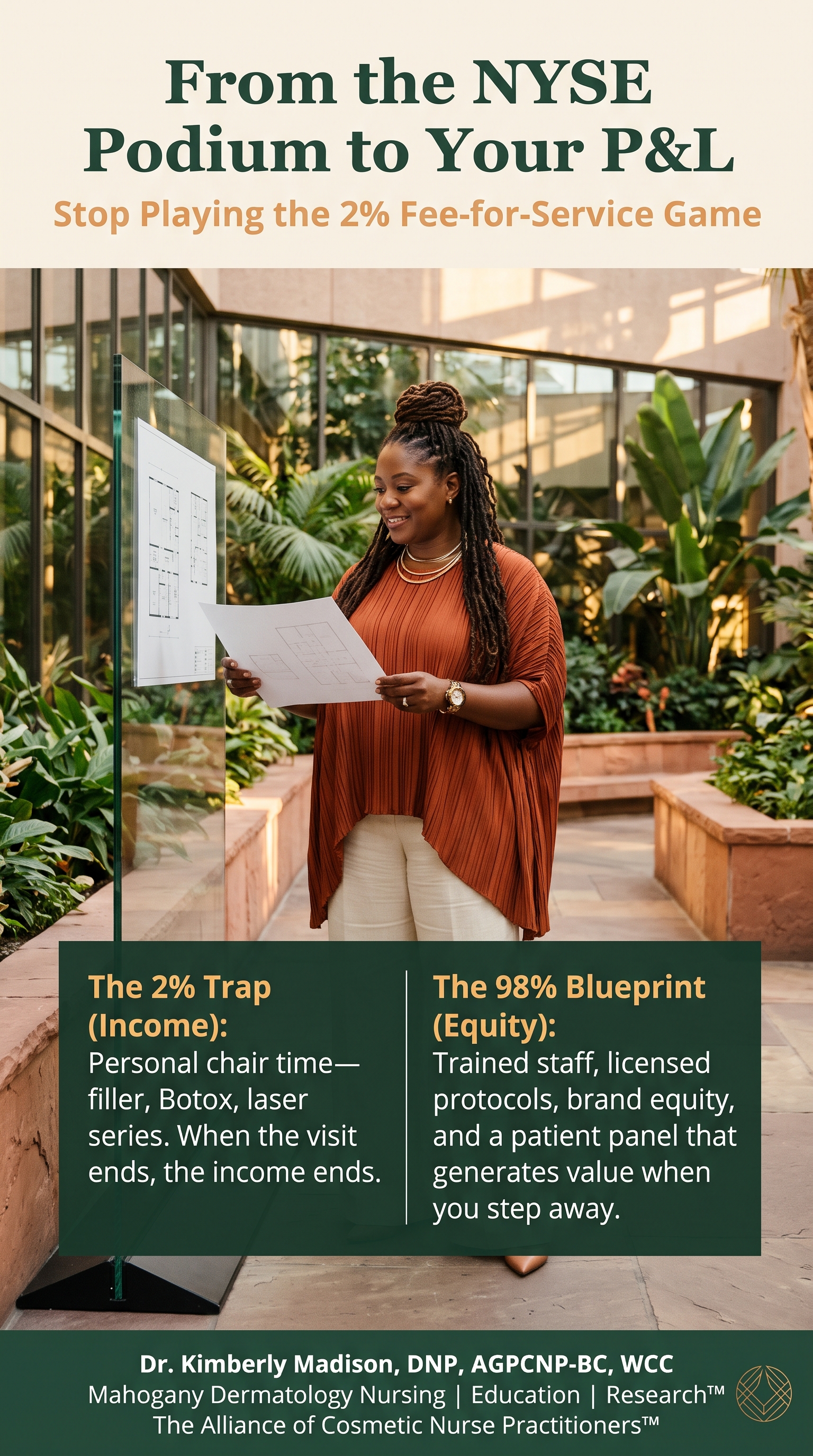
-Su's most recent disclosed compensation, for fiscal year 2025, was $55,161,779. Her base salary inside that total was $1,291,258, roughly two percent of the whole figure. The other ninety eight percent came from performance-based stock and incentive awards, tied to whether AMD hit specific multi-year targets in revenue, net income, free cash flow, and stock performance measured against the S&P 500.
She was not paid $55 million because she showed up to work. She was paid that because she owns a piece of a company she helped build past a trillion dollars, and that company's growth showed up directly in her compensation.
Her daily structure matches the size of what she built. She runs weekend strategy meetings with her senior team, not only weekday ones. She sets multi-year technical roadmaps years in advance and personally reviews major decisions, sometimes late into the night ahead of an early morning meeting. She negotiated AMD's multi-year chip supply deal with OpenAI herself rather than handing the relationship to a deputy. Her own words on why she runs it this way:
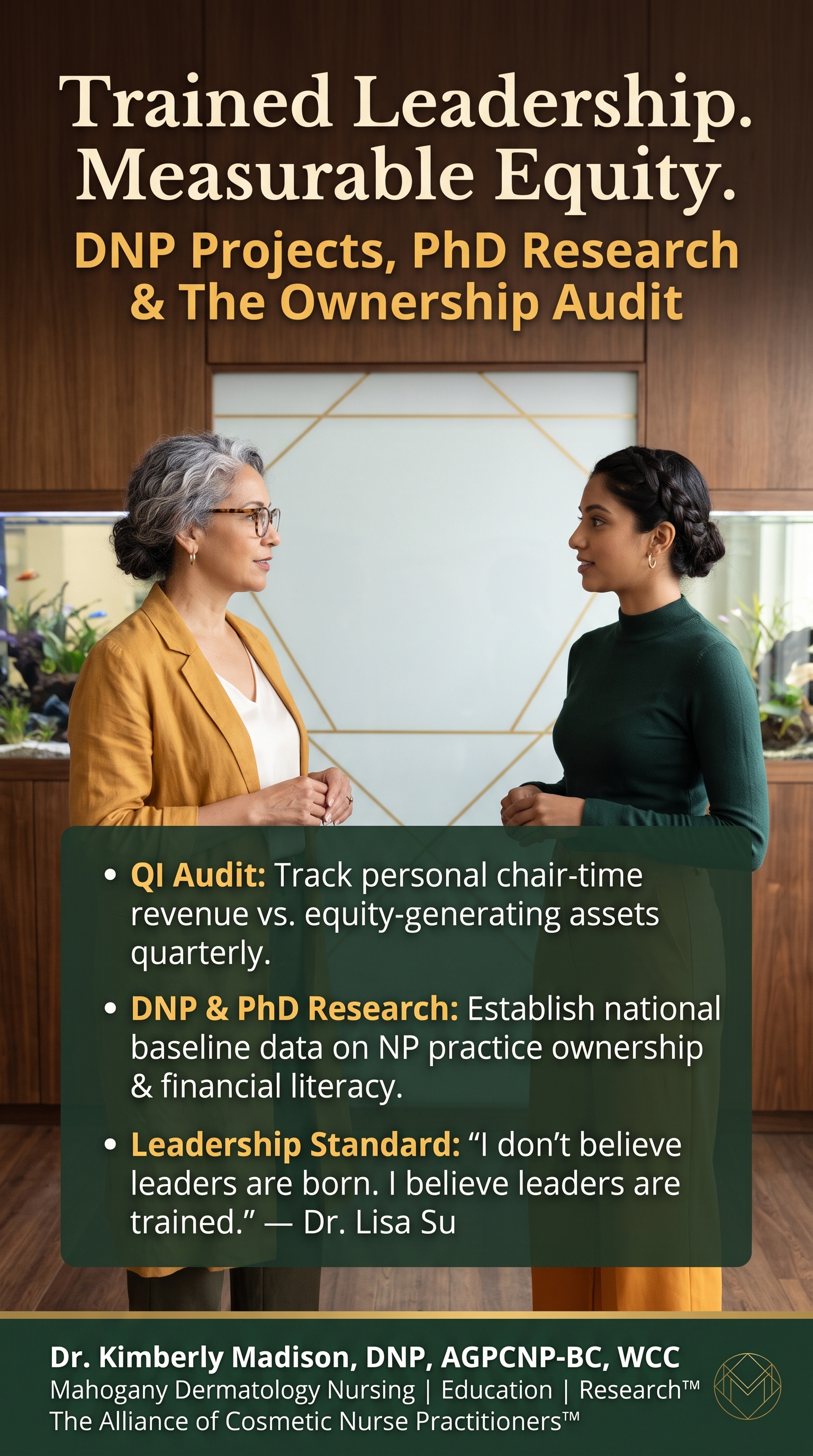
"I don't believe leaders are born. I believe leaders are trained."
Su's line about trained leadership is the significance point for us. Nothing about her path required a credential beyond what many of us already hold or could pursue. It required a decade of building technical depth before the title, and a compensation structure built on ownership rather than an hourly or per-procedure rate. That is a financial literacy lesson sitting inside a business story, and it applies directly to how we structure our own businesses.
Implications for Dermatology and Aesthetic Nurse Practitioners
Su's 98 percent equity split hands us a blueprint to follow.
Most of us are paid the way Su's base salary works: a flat rate for the clinical work performed that day. Filler, Botox, a laser series, a consult, the visit ends and the income ends with it. That is fee-for-service, and it is income, not ownership. Su's compensation shows the other side of the split, the ninety-eight percent that came from what she built, not what she personally did that day. For us, the equivalent is the business itself: the brand, the patient panel, the protocols, the trained staff, anything that keeps generating value on the days we are not physically in the building.
This reframes a question worth asking: not only "what did I charge for that procedure" but "what am I building that still holds value if I take a week off." Selling only our own hours in the treatment room means playing the two percent game. Building a practice, a protocol, or a brand that others can operate means building the ninety-eight, and that distinction is the real competitive advantage available to anyone in our field willing to structure a business around it rather than a service menu.
We are not only clinicians who perform procedures well, we are business owners who understand the difference between income and equity, and that understanding is itself a form of clinical and financial authority most of the aesthetic and beauty industry has not caught up to yet.
DNP Project Ideas
Quality Improvement (QI) Project Title: Auditing Revenue Composition in Independent Aesthetic Practices: Fee-for-Service vs. Equity-Generating Activity Aim: Measure the proportion of a practice's monthly revenue tied directly to the owner's personal chair time versus revenue generated by trained staff, licensed protocols, or brand-driven referrals. Description: A practice-level audit tool NP owners can apply quarterly to track whether their business is shifting toward or away from ownership-style revenue, with the goal of identifying concrete operational changes — delegation, protocol licensing, associate hiring — that increase the equity-generating share over time.
Evidence-Based Practice (EBP) Project Title: Implementing an Ownership Literacy Module in NP Residency and Fellowship Training Aim: Evaluate whether a structured curriculum module on equity, ownership structures, and business valuation improves NP graduates' confidence in practice ownership decisions compared to standard training. Description: Pilot a short curriculum addition covering the distinction between income and equity, basic business structures, and compensation design, then measure pre- and post-training confidence and knowledge using a validated financial literacy instrument.
Policy-Focused Initiative Title: Advocating for Financial and Business Literacy Competency Standards in DNP Curricula Aim: Build the case, with data from ownership literacy pilots, for professional nursing organizations to formally recognize business and financial competency as a required DNP program outcome. Description: A policy brief and advocacy campaign directed at accrediting and professional bodies, arguing that clinical excellence alone no longer accounts for the full scope of DNP-prepared practice, particularly in specialties like cosmetic and aesthetic care where independent ownership is common.
Step-by-Step Guide: From Idea to Implementation
Identify the problem concretely. Pull your own practice's last three months of revenue and separate it into two columns: income tied to your personal hours, and income generated by something the practice owns (staff, protocols, brand referrals).
Name the deficit in plain numbers. If ninety percent or more of your revenue sits in the personal-hours column, that is your starting data point, and the one that makes the case for change concrete rather than theoretical.
Design one intervention. Choose a single ownership-building move: training an associate to perform a protocol you currently do yourself, licensing a treatment protocol you developed, or restructuring one service line around a subscription or membership model.
Implement and track for one quarter. Apply the QI audit tool above before and after the change, and document the shift in revenue composition.
Report the outcome and scale it. Whether the result is a DNP capstone, an internal case study, or content for your own platform, the finding — how much the equity-generating share of revenue moved — becomes the evidence base for the next project or the next practice decision.
PhD Nurse Research Opportunities
Priority research deficits:
Limited published data on the rate of practice ownership versus employment among dermatology and aesthetic NPs nationally
No validated instrument measuring financial and ownership literacy specific to nurse entrepreneurs
Limited research on gender-based disparities in access to capital, credit, or investment education among nurse business owners
No longitudinal data tracking whether financial literacy training during NP or DNP education predicts later practice ownership or revenue outcomes
Potential dissertation topics:
Development and Validation of a Financial and Ownership Literacy Instrument for Nurse Entrepreneurs — building and psychometrically testing a tool that could become the field's standard measure, addressing the validated-instrument deficit above.
Practice Ownership Patterns Among Dermatology and Aesthetic Nurse Practitioners: A National Survey — establishing baseline prevalence data that currently does not exist.
The Relationship Between Financial Literacy Education in DNP Programs and Long-Term Practice Ownership Outcomes — a longitudinal study connecting curriculum exposure to real business outcomes years later.
Entrepreneurial Opportunities and Business Strategies
The Ownership Audit as a standalone consulting service. The revenue-composition audit described above is not only a DNP project, it is a sellable diagnostic. NP founders in any specialty could pay for a structured audit that shows them exactly how much of their income is tied to their own hours versus their business's assets, with a roadmap for shifting the balance.
A digital course on the income-to-equity shift. A short, self-paced program teaching the exact distinction covered here - income versus equity, fee-for-service versus ownership- using real numbers like Su's compensation breakdown as the teaching hook, positions us as the financial literacy authority in a niche where most competitors teach procedures, not business structure.
A partnership model with the investment education community. Bringing structured investment and business literacy content into an existing professional community, workshops, quarterly content, or a residency-style program, turns a topic most NPs never formally studied into a recurring leverage point for both member value and practice growth.
The Shift From Employee to Owner
There aren't enough hours in the day to make a trillion dollars based on you showing up. That's the mindset to get out of first, and it's the whole reason the four quadrant model matters: employee, self-employed, business owner, investor. Most of us live in the first two and never find our way to the other side.
Closing Statement
The pattern we keep running into, the all-male lists, the missing seat, the missing mentorship, broke this week at the New York Stock Exchange on Sept 23. Lisa Su's story hands us more than inspiration, it hands us a financial literacy blueprint: build ownership, not just hours, and structure compensation around what the business creates, not only what one person can personally deliver in a day. We already carry the clinical authority. The equity half of that equation is fully within reach, and closing it matters beyond our own practices, for every NP entering this field who deserves to learn ownership as fluently as they learn injection technique.
About the Author
Dr. Kimberly Madison, DNP, AGPCNP-BC, WCC is a Board-Certified, Doctorally-prepared Nurse Practitioner, educator, researcher, and author dedicated to advancing dermatology nursing education with an emphasis on skin of color, business acumen, and digital literacy. She is the founder of Mahogany Dermatology Nursing | Education | Research™ and the Alliance of Cosmetic Nurse Practitioners™, the first dermatology nursing organization in the country built at the intersection of clinical excellence, skin of color care, and financial literacy for nurses. A selected participant in the Harvard Business School Foundry Mindset Bootcamp (2026), Dr. Madison continues to sharpen the entrepreneurial infrastructure behind her mission. Through peer-reviewed research, published books, and a growing community of nurse entrepreneurs, Dr. Madison is building the infrastructure that makes this profession sustainable for the people who choose it. If you made it this far, she asks you to help her make Financial Literacy the next Clinical Competency - the only path to freedom.