What Dermatology Has Already Taught You About Trading
This article is about what Teri Ijeoma's new book can teach you about the risk you already took. Last month, an article about money became the number one post on this blog for the first time in three years, and I did not publish anything new to make that happen. That told me something about what you actually want to read right now. Then, I published our first list of investing books written by women and asked you to help me build it further. One of you brought me Teri Ijeoma's new book, The Risk Worth Taking. It became book number eleven. Right now, a lot of you treat the stock market as the risky thing and your career as the safe thing you already figured out. That is backwards. You paid for a certificate program with no employer covering the cost and no guarantee it would lead anywhere, on nothing but a belief that skin of color training or a cosmetic certification would open a door. You already ran the exact playbook you are afraid to run with your money. Teri's story shows you what it looks like to name that playbook and use it on purpose, so that the same courage that got you into dermatology can get you into building real financial capacity too. That is the transformation this piece is about: not learning a new skill from scratch, but recognizing the skill you already have and pointing it somewhere new. Before we get into her framework (first-line treatment or care plan) that you can use, you need to know who Teri is: the assessment.
What Dermatology Has Already Taught You About Trading
Last week I published the first ten books on our list of one hundred, financial literacy written by women, for everyone. That list came out of our latest white paper, Financial Literacy as a Clinical Competency, and I asked you to help me build it. Some of you are going to write these books yourselves. Some of you already sent me your first recommendation.
Before we talk about the book, you need to know who Teri is.
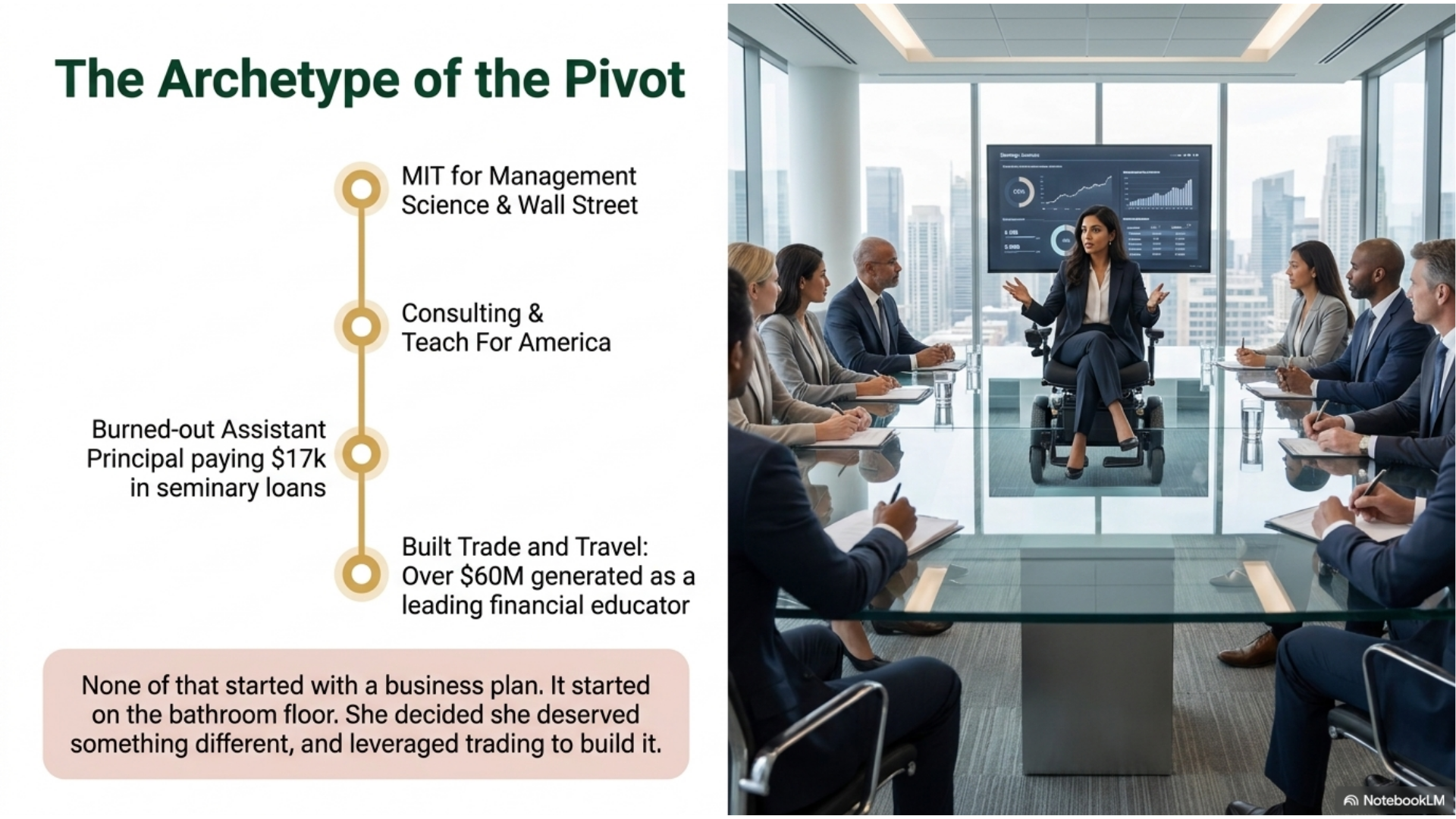
Teri went to MIT for management science. After graduation, everyone told her the same thing: get into finance, get onto Wall Street, get into consulting. So she did. She interned on Wall Street, then went into consulting. Two years in, she knew it wasn't for her. So she pivoted into education, working with Teach For America to train new teachers. From there she went into full time ministry work in Chicago, running volunteers for an after school program for over three years. Then Dallas called her back to help found a brand new charter school in an under-resourced part of the city.
That's where the story most people know about her actually starts. She became an assistant principal, and the job that looked fine on paper was quietly breaking her.
She answered to four different bosses, and none of them were ever satisfied. She stopped sleeping. She gained weight. She was, in her own words, crying in the bathroom nearly every single day.
The Moment That Stopped the Wheel
The moment that finally cracked things open wasn't dramatic on the surface. She was driving to school one morning when her phone started buzzing, over and over, in the passenger seat. She ignored it at first, figuring it was just her group chat. When she finally looked, she found out a close friend had died. She had to walk into the building minutes later and pretend everything was fine, because there was a meeting to get to. She was reprimanded that same day for arriving a few minutes late.
Somewhere around that same season, she had a dream about a house on fire, and in the dream she knew she was going to die. All she could think to tell her mother and grandmother was that she hoped God would let her see the world first. That dream stayed with her. It became the thing that finally moved her.
Her grandmother was the one who told her to go. Her grandmother told her she'd prayed about it and God said go trade, go travel, go do the trip. Her mother, on the other hand, was scared.
Different people in your life will respond differently to the same risk, and that doesn't mean the risk was wrong.
She had already been trading on the side for years, first as a hobby during her education years, then quietly through ministry too. So when she finally left the school, she had something to lean on. She started traveling instead, teaching her first trading class almost by accident in Thailand because the people she was traveling with asked her to. Then Vietnam. Then, back home in Dallas while finishing seminary, the classes kept growing until she put it all online. That became Trade and Travel, eventually the number one course on its platform for three years running, generating more than sixty million dollars.
None of that started with a business plan. It started with a woman on the bathroom floor deciding she deserved something different.
One More Thing Before We Get To the Book
Trading was always the vehicle that funded Teri's actual dream, never the dream itself. That distinction matters, because it is the same distinction I make about nursing every single week: nursing is the vehicle too, the thing that gives you a skill set, a license, and an income you can build something with. The money was never supposed to be the whole story for Teri, and your nursing career was never supposed to be the whole story for you.
Her new book, The Risk Worth Taking released July 14 and has since made the New York Times Best Sellers list, twice! It is not a memoir. It's fiction, built from her own life. The main character, Erin, is also an assistant principal in a toxic building with a boss she can't please. Unlike Teri, Erin doesn't wait a year to leave. She walks away with no plan, in a moment of frustration, and has to figure out the rest afterward.
The person who tells her to go is her grandmother. The person who's terrified for her is her mother. Sound familiar? It's the same split you'll get from your own circle the moment you say you're doing something different with your career or your money. Some people will be your grandmother. Some will be your mother. Neither reaction means you're wrong.
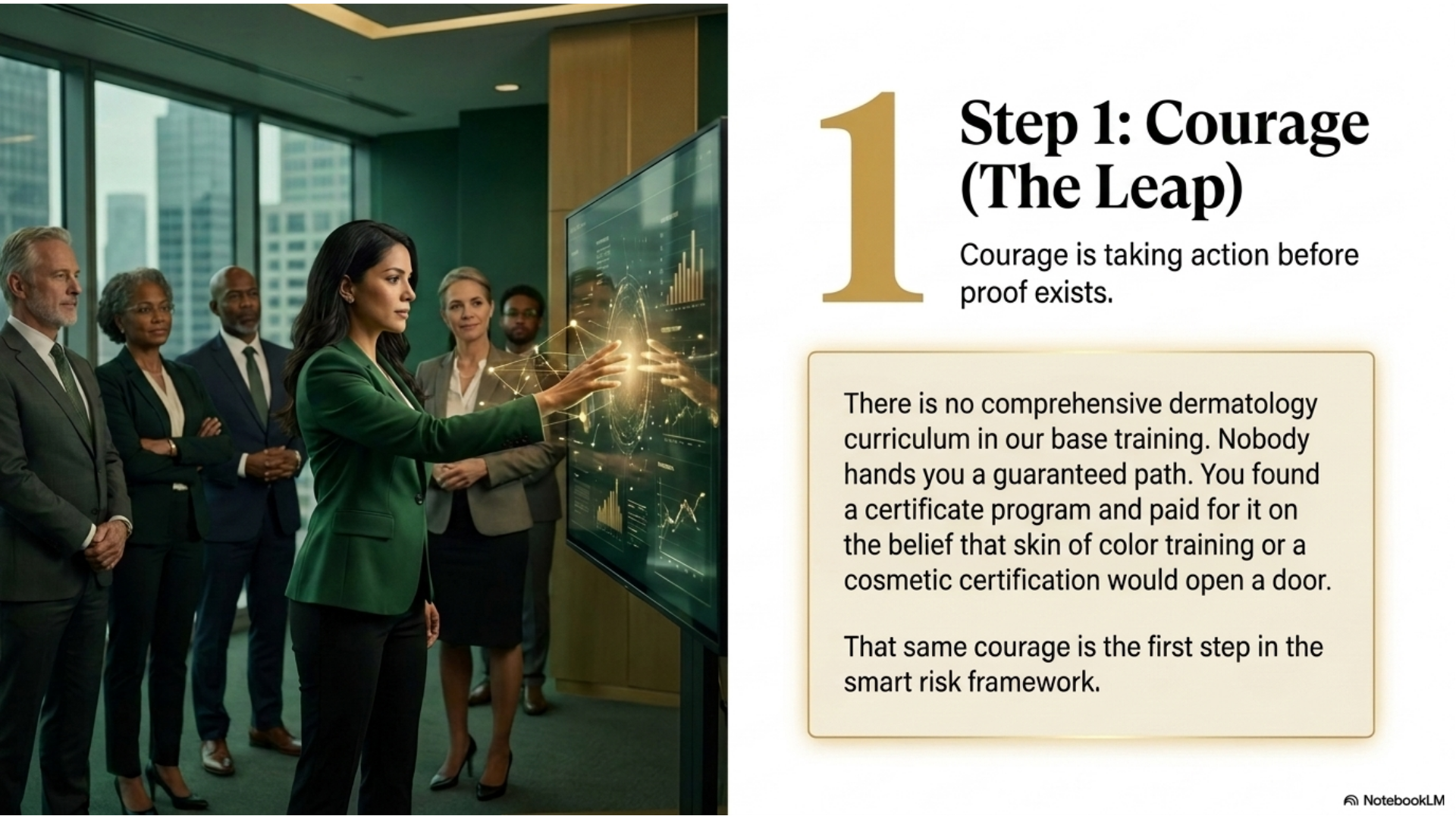
Erin's grandmother hands her a framework for taking any risk well, four steps Teri calls the smart risk framework. The first is courage, just deciding to take the leap. The second is clarity, learning the actual basics of the thing you're risking on instead of guessing. The third is caution, building in real protection because a risk is a risk for a reason. There's a fourth step Teri keeps for the pages of the book itself, which tells you something about how she thinks about giving away value versus holding some back for the people willing to go deeper.
Erin also loses money in the story. Teri was intentional about that. Investing books like to pretend it's all upside. Erin gets cocky, gets greedy, takes a real loss, and has to work through what it means to fail at something you chose for yourself, in front of people who already doubted you. That's the whole point of including it. The risk isn't the absence of failure. It's building a plan that survives failure.
That's you. That's every nurse I talk to every week who is burned out, overextended, and quietly wondering if there is a different way to build a life around this profession instead of just surviving inside it.
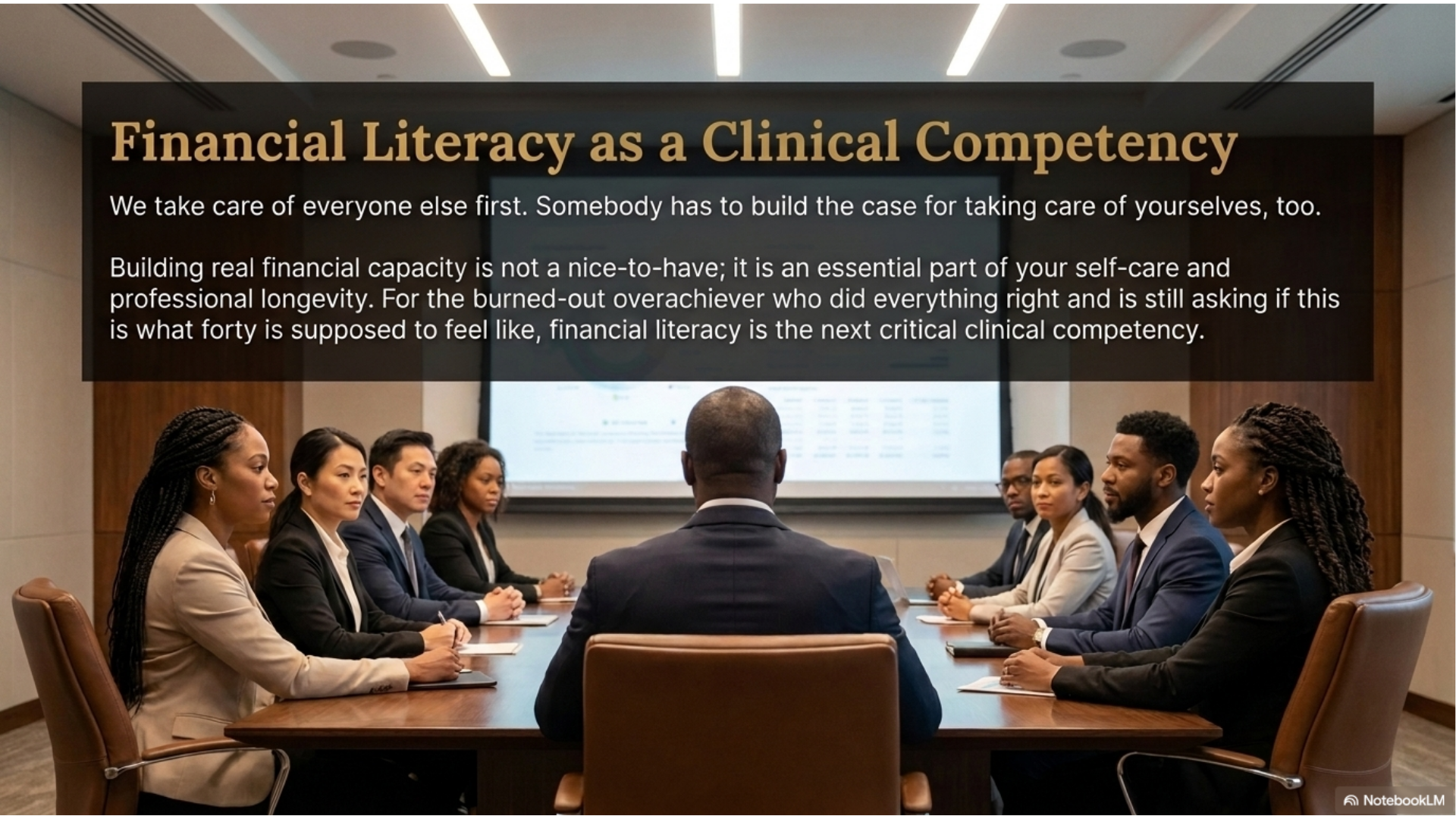
In her own words, Teri wrote this book for the burned out overachiever, the person who did everything right and is still asking whether this is really what forty is supposed to feel like. Read that sentence again and tell me it is not describing this exact community. It is the reason we're promoting plant medicine. It is the reason I keep saying financial literacy is a clinical competency and not a nice-to-have. We take care of everyone else first. Somebody has to build the case for taking care of yourselves too, and building real financial capacity is part of that care.
Here's The Thing I Want You to Think About Differently This Week
When we talk about risk, you tell me all the time how scared you are of the stock market. But you have already run this exact playbook once, in dermatology, without calling it a playbook.
There is no comprehensive dermatology curriculum in our base training. Nobody hands you a guaranteed path. You found a certificate program or a preceptor with no employer covering the cost, no promise the training would translate into the job you wanted, and no data set showing you exactly how it would turn out. You paid for it anyway, on the belief that skin of color training, procedural competency, or a cosmetic certification would open a door. That is courage, the same first step in Teri's smart risk framework, decided before you had any proof it would work.
Then you did the part most people skip. You learned the actual specialty, the diagnoses, the products, the injectable techniques, the things that separate a nurse practitioner who guesses from one who knows. That is clarity, the second step, and it's the same step Teri makes anyone learn before they place a single trade. Nobody hands you a profitable position any more than they hand you a dermatology license. You build the knowledge first.
And you built in protection along the way too, whether you called it that or not. Malpractice coverage. Board certification. A mentor to call when a case looked wrong. That's caution, the third step, the same one that keeps a trade from turning into a disaster.
You already ran courage, clarity, and caution once, in a specialty with far less public information available than the stock market has. The market has over a hundred years of data behind it. If you buy and hold for the long run, history says you win. Your dermatology career had none of that data and you took the leap anyway.
Investing is not a bigger risk than the one you already took. It might be the smaller one.
Next week I'll walk you through how Teri used trading to pay off seventeen thousand dollars in seminary loans, a number that will sound very familiar to anyone who financed a university-based dermatology NP program or any advanced nursing degree. Teri is living proof this works, not a theory.
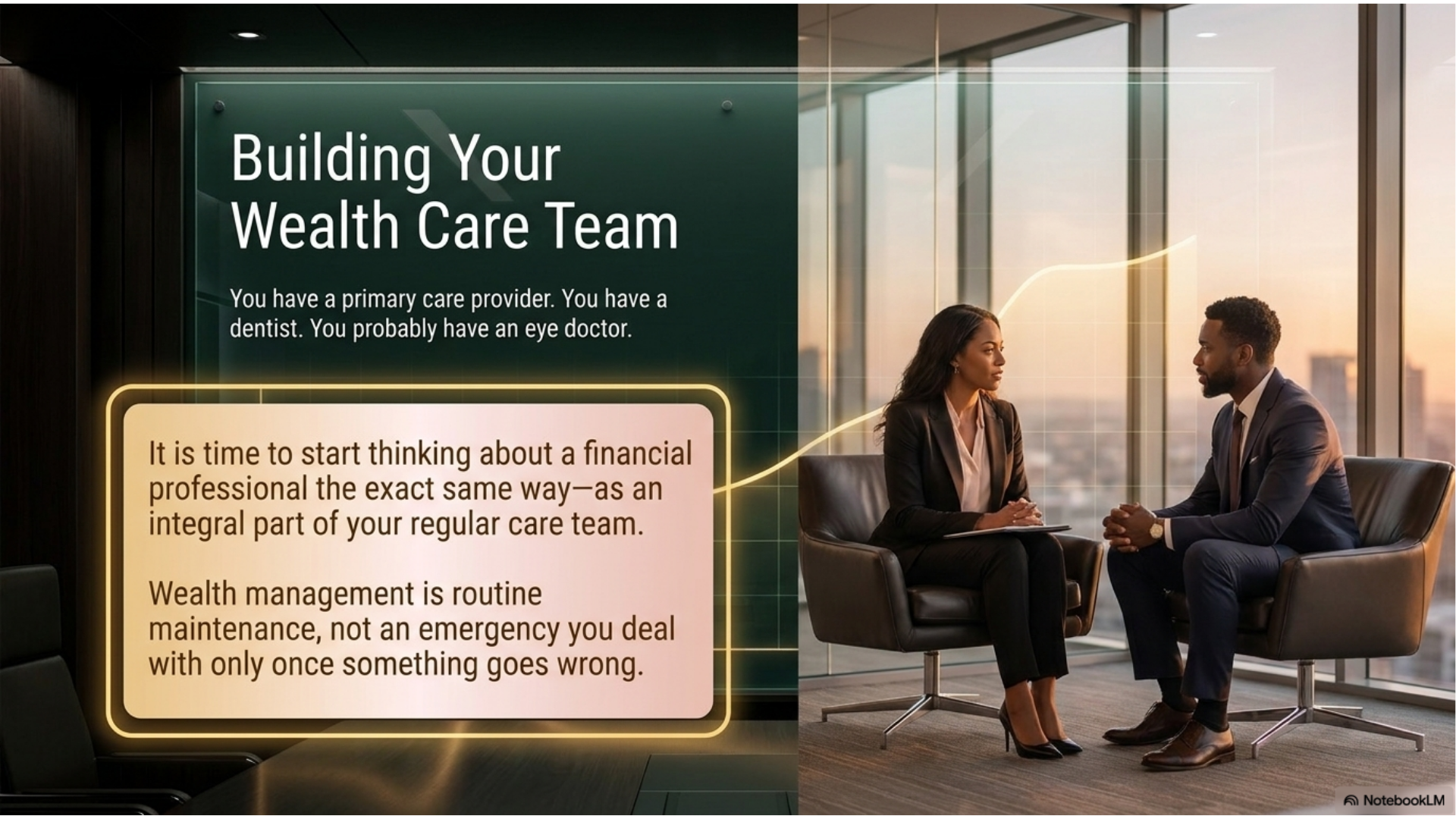
You have a primary care provider. You have a dentist. You probably have an eye doctor. It's time to start thinking about a financial professional the same way, as part of your regular care team, not an emergency you deal with once something goes wrong. We'll talk more about exactly who those professionals are and what to look for over the next few weeks.
Dr. Kimberly Madison, DNP, AGPCNP-BC, WCC, is a Board-Certified, Doctorally-prepared Nurse Practitioner, educator, researcher, and author dedicated to advancing dermatology nursing education with an emphasis on skin of color, business acumen, and digital literacy. She is the founder of Mahogany Dermatology Nursing | Education | Research™ and the Alliance of Cosmetic Nurse Practitioners™, the first dermatology nursing organization in the country built at the intersection of clinical excellence, skin of color care, and financial literacy for nurses. A selected participant in the Harvard Business School Foundry Mindset Bootcamp, Dr. Madison continues to sharpen the entrepreneurial infrastructure behind her mission. Through peer-reviewed research, published books, and a growing community of nurse entrepreneurs, Dr. Madison is building the infrastructure that makes this profession sustainable for the people who choose it.
.svg)

.svg)
.svg)