From Vision to Voice: Turing Preparation to Progress
If you've been building quietly, launching systems without fanfare, deepening expertise without chasing visibility, investing in relationships that won't pay off for years, this reflection will show you why that work matters. November taught me that momentum isn't loud. It's the month you finally launch the consulting practice you've been running informally for years. It's the research collaboration that starts with three women on a Saturday call and ends with translational science that could change outcomes for millions. It's the client who publishes her first article, the intern who co-authors her first peer-reviewed paper, the high schooler who receives editorial mentorship that could shape her entire career. In this reflection, you'll see what it looks like to move from preparation to progress, not through viral moments or promotional campaigns, but through infrastructure building that compounds over time. You'll learn how to recognize momentum when it doesn't look like milestones, how to build systems that make permission irrelevant, and why the work you're doing right now (even when it feels invisible) is exactly what positions you to lead when others are still asking for approval. This is for nurse practitioners who are tired of waiting for institutions to validate their work and ready to build something undeniably excellent on their own terms. Let's talk about what that transformation actually looks like.
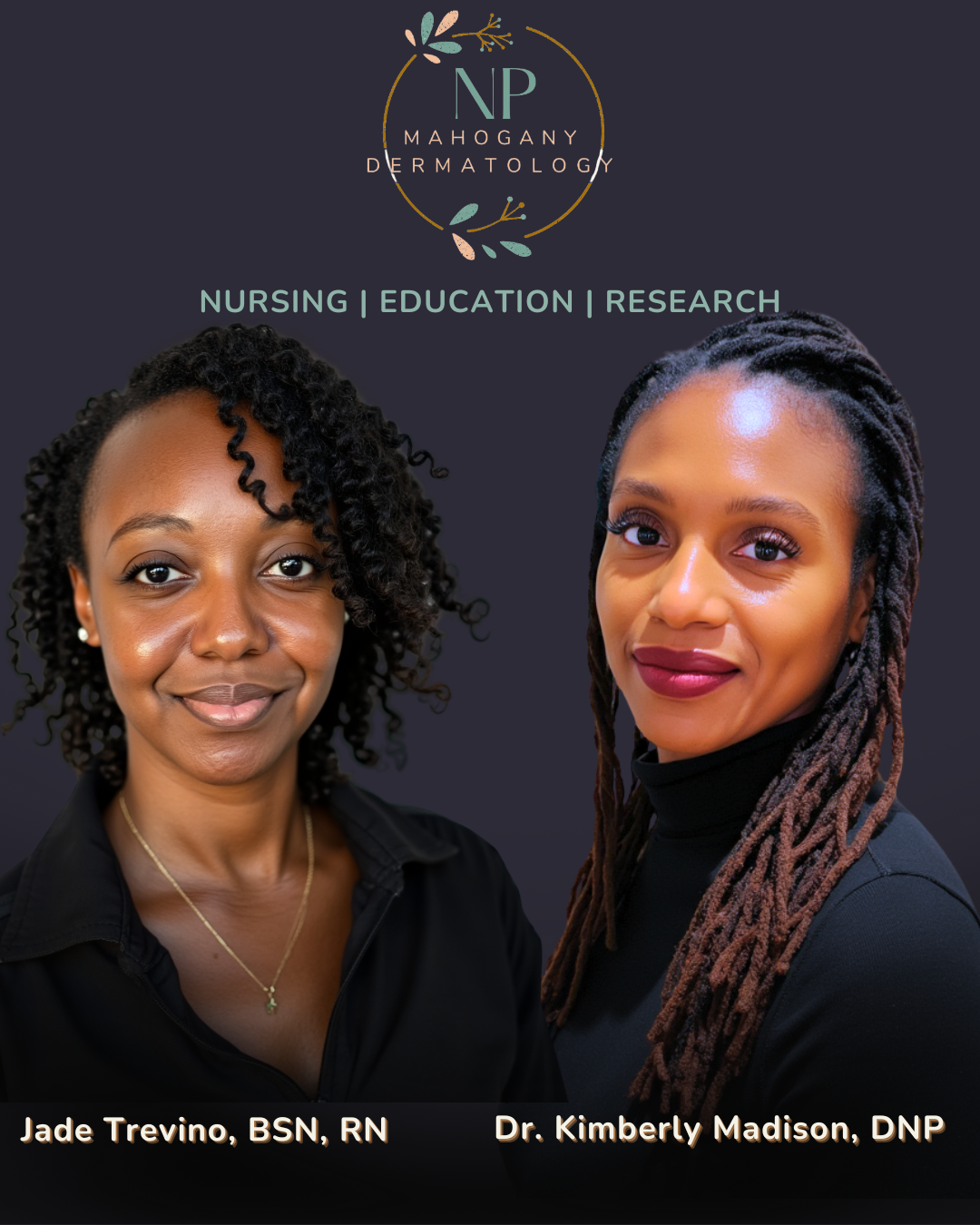
By Jade Trevino, BSN, RN
Personal Experience as an Intern This Month
This month felt different. I didn’t have a long list of internship-specific tasks, and at times I caught myself wondering if I had done “enough.” But when I slowed down and looked at the bigger picture, I realized that this month was actually one of the most defining months of my entire year. The growth I experienced wasn’t about checking boxes. It was about stepping deeper into who I’m becoming as a dermatology nurse, an entrepreneur, and a leader.
Most of my progress this month happened through Go Skin Check, but it directly reflects the confidence, clarity, and business mindset I’ve been building throughout the Mahogany Telederm Internship.
Here’s what I accomplished:
• Secured my attorney
• Finalized my business plan
• Found a teledermatology provider to see my patients
And one of the biggest wins: I reached out to a local NP entrepreneur for guidance, and she offered a personal introduction to her medical director, who will now be my medical director.
None of these wins happened by accident. They came from months of practice: communicating more clearly, trusting myself more, being open to mentorship, and giving myself permission to move forward even when everything isn’t perfect. This month reminded me that growth in entrepreneurship is growth in the internship. It all overlaps. It all counts.
What Was Most Valuable or Unexpected?
The most valuable part of this month was learning how much confidence is built through action. I didn’t feel “ready” for most of the steps I took, but doing them anyway became the lesson.
The unexpected part was realizing how many people are willing to support you when you show up with intention. The personal introduction to my medical director came from simply asking, and that one ask changed everything.
Key Takeaways and Tips for Future Interns
This month helped me see that growth can be both internal and external. Some of the biggest breakthroughs happen quietly while you’re building courage, clarity, and momentum.
Key takeaways:
• Entrepreneurship stretches you in ways traditional nursing doesn’t.
• Confidence grows every time you follow through on something that feels intimidating.
Tips for future interns:
• Trust yourself enough to try things before you feel fully ready.
• Build relationships early. One conversation can change your trajectory.
How Does This Prepare Me for My Future in Dermatology Nursing?
This month strengthened my ability to think and operate beyond the clinical side of dermatology. It taught me how to build partnerships, communicate professionally, and navigate the legal and operational steps required to deliver dermatology care in new, more accessible ways.
This is exactly the direction dermatology nursing is moving toward. - Jade Trevino, BSN, RN
Integrating clinical expertise with digital tools, business literacy, and innovative care models. Every step I took for Go Skin Check also built the foundation for the kind of dermatology nurse I’m becoming.
I’m learning how to take action faster. Business acumen becomes easier to learn when you apply it immediately, even on a small scale.
Looking Ahead: Goals for Next Month
As I move into the final month of the internship, I want to focus on closing this year with intention. My goals are to:
• Prepare my final reflection in a way that captures my transformation, not just my tasks
• Step into the final month of my internship with gratitude and a clear vision of what comes next
This month showed me that courage and momentum are deeply connected. Month 12 will be about honoring both.
By Dr. Kimberly Madison, DNP
Full Speed Ahead
On November 1-2, 2025, The Beauty Beat: The UK’s Only Luxury Beauty Event for Women of Color held their annual event both online (for free) and in person (for a fee). The event returned to London's Queen Elizabeth II Centre for its fourth annual iteration, building on the momentum of 2024's record-breaking event that welcomed over 2,300 attendees to what founder Donna Dia describes as "a love letter to women of colour." This matters for two reasons that directly impact how we build our aesthetic businesses: clinical excellence and business strategy are inseparable when you're serving patients of color. For decades, women of color have spent billions annually on beauty products while attending industry events that neither catered to their specific needs nor reflected their purchasing power. The Beauty Beat disrupts that pattern by creating a luxury experience where hyperpigmentation isn't a footnote in a 45-minute general skincare talk, it's a deep-dive conversation. Where hair discussions don't try to compress relaxed hair, braided hair, transitioning hair, and natural coils into one generic segment, but instead dedicate two hours to the expertise women of color actually need. Where the goodie bags worth over £450 aren't filled with foundation shades that oxidize on melanated skin, but with full-sized products from brands like Fenty Beauty, Shea Moisture, and Cantu Beauty that were formulated with us in mind.
As Cosmetic Nurse Practitioner Entrepreneurs, you should be taking notes on both fronts. Clinically, this event demonstrates what happens when you center patients of color in protocol development rather than treating them as variants of a default standard designed for lighter skin. The same principle applies in our practices: patients with skin of color aren't asking for inclusion in treatment protocols designed for white skin, they're asking us to develop clinical expertise specific to their physiology, the same way The Beauty Beat curated brand partnerships and speaker lineups specific to their audience's actual needs. From a business perspective, The Beauty Beat proves what happens when you design experiences that truly see your audience, not as an afterthought or a diversity checkbox, but as the sophisticated consumers we are. You don't just fill seats. You create a movement. The Beauty Beat sold out its first year, expanded to over 2,300 attendees by year three, and secured headline partnerships with Instagram and TikTok, not because the industry finally decided to be inclusive, but because Donna Dia refused to wait for permission to build the prestige platform women of color deserved. That's the kind of founder energy we're building at the Alliance of Cosmetic Nurse Practitioners. We’re not asking for a seat at someone else's table, but constructing our own and making it so undeniably excellent that the industry has no choice but to recognize what we've always known: we're not just participants in the beauty and aesthetics economy. We're the ones driving it forward.
When we stop treating diversity as a nice-to-have add-on and start building clinical protocols, product selections, patient education materials, and entire practice models with women of color as the standard rather than the exception, we don't just improve outcomes. We create the kind of patient loyalty, clinical authority, and practice growth that comes from people finally feeling seen in a healthcare setting.
My Observations. The women who attended reflected the mission of the organization. The images didn’t reveal an overly dressed or an audience adorned completely in brand names. Each speaker demonstrated how to use the products with mastery, they represented the company’s values, and were eager to answer the audience’s questions, further building the Know, Like, and Trust Factor with their target audience. At first, I didn’t appreciate the authentic interaction and simplicity of each demonstration. But, then I realized, where else do we get the opportunity to learn about products directly from brands on how to use it, especially as women of color? The hosts curated a community event that wasn’t at a gym, wedding expo, or local 5K. They gave just as much value as the attendees gave them. The audience was able to ask questions in real time (feedback), share their pain points and desires (opportunities to solve their problem), and be surrounded by a community of people with shared experiences (community leads to greater engagement). What stood out the most from the Q&A sessions was how much the women were struggling with low confidence. It reminded me of coaching communities where 95% of the conversations are focused on helping people believe in themselves. It also goes to show why, as entrepreneurs, we may pour a lot of time into obtaining new skills like Botox and filler, developing a new hair care line, or earning another degree, but at the end of the day, most people just need encouragement.
The expo sounds like the G.O.A.T and I was thrilled to see YouTube sensation and one of the first dermatologist entrepreneurs I learned from, Dr. Vanita Rattan, who spoke on the Sunday BIG Beauty Talk panel, proved why she has more than 1 million subscribers, and was a vendor in the marketplace doing what she does best: building relationships, allowing her audience to tell her their problems she can solve, and never missing an opportunity to give a call-to-action.
You’re in luck! You can watch the replays for free by visiting their website or YouTube channel. You can also sign up to join their free Beauty Club, which will give you access to their beauty events, wellness experiences, premium product sampling, and more.
The Space Nurse: Building a Brand
In November, I quietly launched Mahogany Dermatology Nursing Consulting, and I say "quietly" because there was no promotion; it was about finally creating the infrastructure I'd been building toward for years. The truth is, I'd been consulting informally since before I even had language for what I was doing. I’ve been saying yes to every NP, entrepreneur, and student who reached out or responded to my pitch, trying to help them break even, increase their visibility, position themselves as dermatology experts without formal fellowships, or get their dermatology DNP project approved. Somewhere between call 0 and call 50, I realized I was running a full consulting practice without any of the systems that would make it sustainable. I created the infrastructure I needed to scale: a master application form with a scoring rubric, automated Kajabi and Calendly funnels, high-touch email templates, packages designed for three distinct audiences, NP founders at different stages, graduate students navigating DNP projects, and brands seeking to authentically connect with the skin of color market. The 90-Day Accelerator for new founders who need a roadmap. The 6-Month CEO Circle for established NPs ready to move from practitioner to true business owner. VIP Days for decisive founders who want to achieve in one day what would normally take six months. Student mentorship for those navigating scholarly projects without adequate support. Brand consulting for companies that understand the professional and consumer skin of color market represents billions in untapped potential, but don't know how to enter it with credibility. Christine Rincon, PMHNP student, became my first client to use the Mahogany Method Framework™ as we aggressively sought to brand her as The Space Nurse with specific metrics within a 90-day window, and she did not come to play! I wrote about her initial accomplishments in my October reflection. In November, she made her debut on The Melanin Initiative podcast as one of the first steps to help her refine her message, demonstrate her thought leadership in a fairly unknown specialty in nursing, attract her target audience, and generate income. With that came the official launching of Space Nurse Week, which will continue to take place the first week of November.
Christine published her first article for the Mahogany Dermatology blog: "Astronauts Can't Wash Their Hair in Space. Here's What Happens After 166 Days." The piece did exactly what we'd strategized, positioned her as a thought leader bridging aerospace medicine and dermatology, demonstrated her ability to translate space medicine research into clinical insights, and created a tangible content asset to leverage across platforms. She used Karen Nyberg's 166-day ISS mission as the hook, then expanded into dermatology implications: epidermal thinning, barrier breakdown, and rashes occurring 25 times more often in space. The genius was framing aerospace medicine as relevant to every nurse, connecting microgravity-induced skin changes to ICU care, geriatrics, and underserved communities where environmental factors shape health. Publishing on Mahogany Dermatology gave Christine credibility in a field where nursing has been excluded, aerospace medicine, while introducing our audience to opportunities they'd never considered. This is strategic content: positions you as an authority, educates your audience, creates pathways into markets that didn't know they needed you.
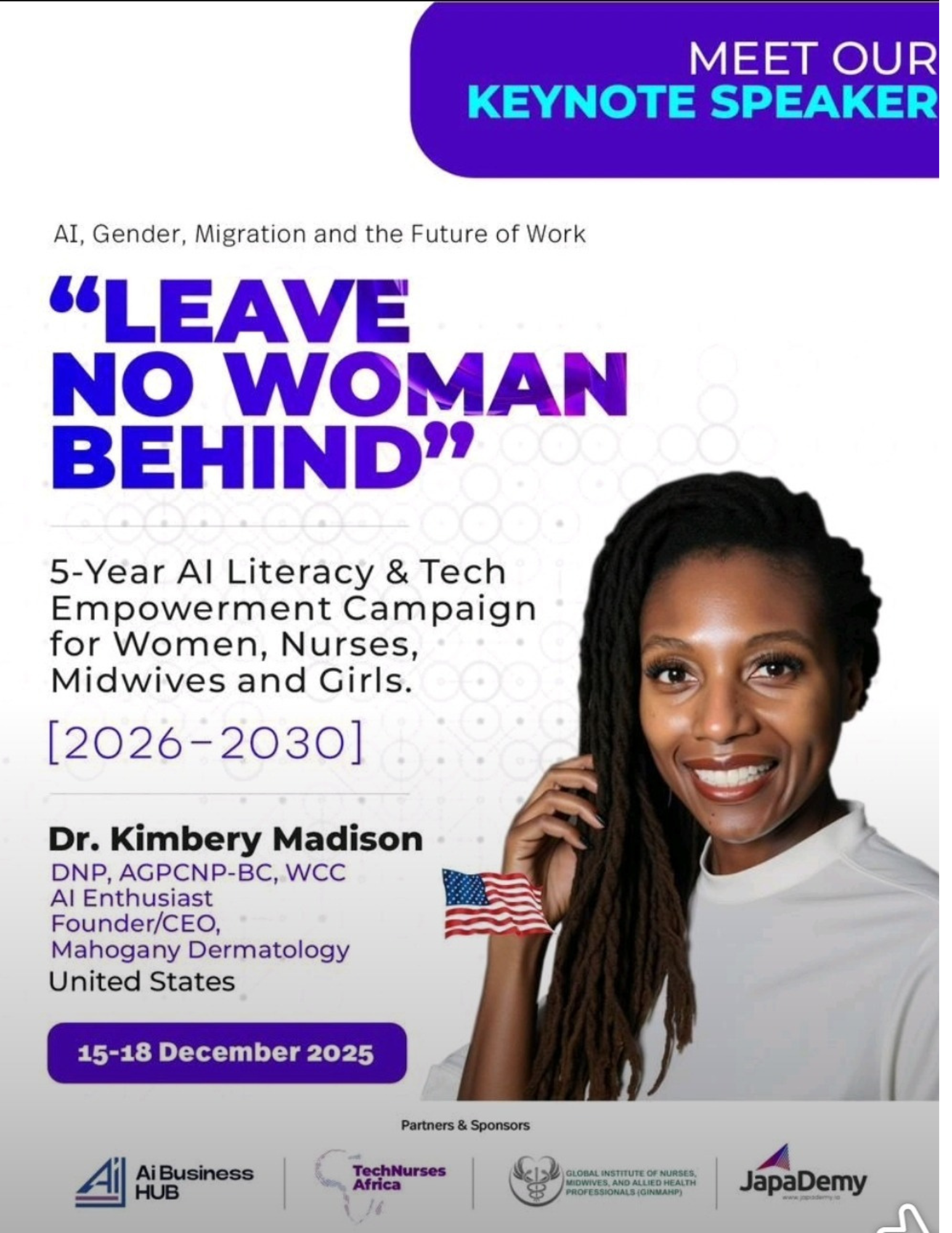
My First Invitation to be a Keynote Speaker
I learned about the global AI skills gap facing nurses through a video call with Josiah Okesola, a clinical nurse with 25 years of experience who walked away from bedside care because it felt too restrictive and reinvented himself as an AI strategist. In November, he invited me to keynote the December unveiling of his five-year initiative to train one million nurses and midwives in AI literacy, addressing the reality that only 22% of women globally lead in tech and AI development. His thesis: if we don't bring more women, particularly nurses, into AI, we risk building a future where the caring, human-centered aspects of healthcare are designed out entirely. The invitation wasn't just to speak…. more on that soon. Just know it mirrored what I've been wanting to do: cultivate relationships with nurses in Africa and own a piece of the real estate, but not in the way I imagined, but better. This partnership with TechNurses Africa reflects what I’ve been building through Mahogany Dermatology and the Alliance, teaching nurses not just to understand AI, but to use it to solve real problems, build real businesses, and generate real income. During our conversation, Josiah identified a gap that I could fill. By the end, we'd committed to collaboration: I would deliver the December keynote on digital fluency, participate in storytelling sessions, and help execute his vision in nursing education and entrepreneurship. In return, he offered co-ownership in a movement reaching one million nurses in five years through a global movement. What made me say yes was his recognition that nurses don't see the immense power we hold. We're the largest female-populated profession globally, experts in human behavior and communication, holding data on human experience no one else has. But we've been trained to see ourselves as worker bees, not innovators or entrepreneurs. This partnership represents everything I've been working toward: elevating nurses to decision-making roles, using AI to amplify our expertise, building financially fulfilling businesses, and doing it borderless, connecting African entrepreneurship with American markets. In November, I received my first invitation to keynote. But what I really received was an invitation to help build the future where nurses lead the AI revolution, leaving now woman, nurse or midwife behind.
Houston Hair & Skin Health Collective: A Community Education Event
On November 15, I attended the Houston Hair & Skin Health Collective's community education event, a free hair and scalp screening initiative sponsored by Eli Lilly and hosted by Dr. Oyetewa Asempa, MD, FAAD (Baylor College of Medicine). I’ve already recapped the event here: Follow the Money.
Organizing community health screenings should be part of your practice strategy, not just something pharmaceutical companies do. Here's what I’ve learned over the years: partner with local organizations that already have community trust and infrastructure, The Community Collective for Houston had the space, the relationships, and the credibility. Offer something tangible and free, screenings remove the financial barrier that keeps people from seeking care. Bring multiple specialists to one location so attendees can access comprehensive care in a single visit instead of navigating multiple appointments across different offices. Create pathways to follow-up care by having specialists available to book appointments on-site or provide direct contact information. And document everything, collect contact information for your email list, gather testimonials from attendees, takea photos for your website and social media, because these events aren't just community service, they're marketing that builds trust and fills your calendar with patients who already know your clinical expertise and cultural awareness. If you're a cosmetic or dermatology NP wondering how to increase visibility in your community, generate qualified leads, and differentiate yourself from competitors who only market on Instagram, organizing a free community screening in partnership with local organizations is how you do it. You don't need Eli Lilly's budget. You need a community partner, a Saturday afternoon, and the willingness to show up where your patients already are.
New Contributing Author: Emily Chow
We published Emily Chow's second article for the Mahogany Dermatology blog, a reflection on her journey from a teenager who hated sunscreen to the host of the sunsunpodcast where she interviews dermatology nurse practitioners, dermatologists, and researchers about UV protection and skin health. You can read it here. What I love about Emily's work is that she's not waiting until she has advanced degrees or decades of experience to contribute to the conversation. She's using the platform available to her right now, podcasting, to reach her peers in a way that traditional patient education never could. But I also challenged her to evolve beyond personal narrative. I asked her to bring one of her podcast interviews to life in her next piece, give us a moment, a quote, a behind-the-scenes story that surprised her or changed how she thinks about UV protection. To dig deeper into the specific barriers that stop teens from using sunscreen: the "I don't burn so I'm fine" misconception, peer pressure, the belief that skin cancer is an "old person problem." To share the entrepreneurial struggle, the guest who canceled last minute, the midnight YouTube tutorials on audio editing, the moments she wanted to give up. Because that vulnerability and specificity is what transforms health education from information into action, and what makes her success feel attainable to another teen sitting on an idea but hasn't started yet.
Emily's perspective matters because peer-to-peer communication works, but it works even better when it's honest about the process, specific about the barriers, and actionable about the solutions. By giving her both a platform and editorial guidance that pushes her to go deeper, we're modeling what it looks like to take youth advocacy seriously, not as cute or inspirational content, but as legitimate public health strategy that can shift behavior and improve outcomes.
I requested permission from Emily’s mom before she could contribute. If you’re a minor reading this and interested in becoming a contributing author, I’ll require the same of you.
Fibroid-Keloid-CCCA Research Team
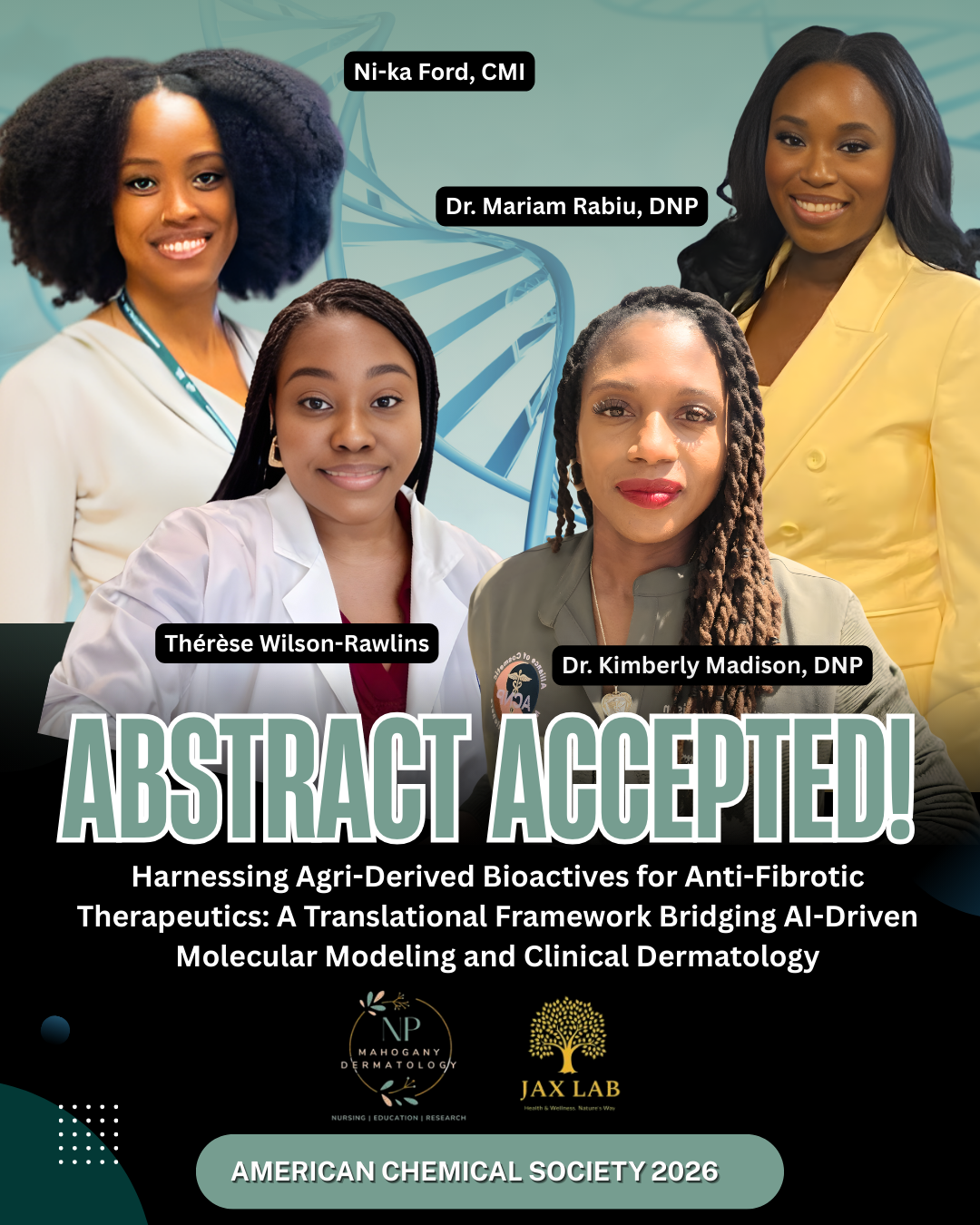
Dr. Mariam Rabiu, DNP, Thérèse Wilson-Rawlins, and I held our first monthly progress meeting for the Fibroid-Keloid-CCCA research initiative. We began designing a research project that could fundamentally change how we understand three debilitating conditions disproportionately affecting Black women. You can read more about why this work matters here. We clarified roles immediately, discussed funding, and the strategy for our scoping, which will contextualize Thérèse's work and identify the clinical gaps. Dr. Rabiu and I will establish the clinical foundation while Thérèse pursues the molecular science in parallel. Thérèse volunteered to help across all sections since she needed to understand the full clinical landscape for her Canadian grant applications. Then came the patient survey discussion, capturing lived experiences to inform which bioactive agents to screen for. What do women being treated for fibroids actually feel? Keloids? CCCA? The symptom overlap would guide molecular pathway targeting. I'd drafted a preliminary survey; Mariam flagged the length (decision fatigue by question 10). We'd refine it, but wouldn't oversimplify. What struck me wasn't the methodology, it was watching three women from different disciplines find the through-line connecting our work. We were building something none of us could build alone. This meeting reminded me why nurses must lead this work. We're not waiting for institutions to decide our communities are worth studying, to get permission, or for pharmaceutical companies to fund research into conditions affecting Black women. We're building research infrastructure ourselves, publishing papers ourselves, identifying therapeutic targets ourselves, and changing the standard of care ourselves. If three women on a Saturday before Thanksgiving across three time zones can design groundbreaking translational science improving outcomes for millions of Black women globally, the question isn't whether nurses can lead research. It's why it took this long.
DNP vs PhD in Nursing in 2025: What You Don't Know Can Hurt You
On November 13, Dr. Kimberly Souffront, PhD, RN, FNP-BC, FAAN, came to Houston for the Third Annual Nursing Reignited Symposium at the Houston Methodist Research Institute, and I finally got to meet her in person. This was the nurse scientist who, during our first podcast interview last year, completely reframed how I understood the relationship between DNP and PhD nurses. Before that conversation, I thought I had to choose between generating knowledge and translating it, between researcher or practitioner. Dr. Souffront showed me I didn't have to choose at all. You can read my full review here.
Are Nursing Degrees Still Professional Degrees? What Trump's H.R. 1 Actually Changes (And Doesn't Change)
I published the complete 5-part H.R. 1 & Nursing Doctorates Series this month, clarifying what Trump's bill actually changes about nursing graduate degrees and what it doesn't. Your DNP is still a professional degree; your PhD is still a research degree, nothing about your clinical credentials, scope of practice, or professional standing has changed. What has changed is how federal student loan programs categorize certain graduate nursing degrees for loan forgiveness eligibility, creating significant financial implications starting July 1, 2026. The series addresses the compensation crisis for doctorally-prepared nurses, provides detailed negotiation frameworks (including how to have others negotiate on your behalf), and outlines six concrete leadership opportunities for DNP and PhD nurses to proactively strengthen nursing education, dermatology access, and NP-led innovation during this policy shift. You can listen to the audio recap on The Melanin Initiative podcast.
We Submitted Our First Peer-Reviewed Article
When I created the Mahogany Dermatology Nursing Internship application for 2025, one of the requirements was to help me publish peer-reviewed research articles. Each applicant was also tasked with submitting a writing sample (see the details here). Jade’s application article was so good, I asked her if we could make that our first published article. She said yes! What’s ironic, when I first decided to write a couple years ago, I wanted my debut article post-DNP to be about Artificial Intelligence. The journal I wanted to write for, asked if I would be open to writing about the lack of diversity in dermatology nursing education. So I pivoted. I completed that lit review twice now, and it’s in the queue to be my next submission. While Jade’s original paper didn’t include AI, I pitched the idea to incorporate it, and she agreed. I ended up writing about AI in dermatology first, after all. I asked the target journal earlier in the year if their readers would be interested in an article on AI and after a few back-and-forth emails, they said they’d be open to it and were excited to read what we wrote! We submitted, signed the required copyright and author forms, and now we wait for the peer reviewers to read, make recommendations, and see if we’re required to make any revisions or answer any questions. It was the perfect way to wrap up the internship, gifting Jade a spot as an author – a prestigious opportunity many medical students know far too well (it’s built into the culture), but nurses see as busy work, outside of their scope of interest (many say they just don’t like research), and boring. But Jade, the Registered Nurse, gets it. In fact, if you’re like Jade who said she didn’t know RNs could get published in peer-reviewed journals, well, now you know. Depending on the journal, you might need to be a co-author with a nurse practitioner, physician assistant or physician. Just check the author guidelines.
I started conceptualizing the next phase of the internship: dates, requirements, when to open and close the application, how involved Jade should be, and the pros and cons of continuing. The application opened December 28, 2025, and I'm already thinking about what success looks like, not just for the 2026 intern, but for the scalability of this model. I'll dedicate a separate article to my overall experience, but for now, I invite you to check out the 2026 Mahogany Dermatology Nursing Internship application and apply if you're ready to change your life.
If you're thinking about starting your own internship program, follow along to be notified when Jade and I publish The Mahogany Dermatology Nursing Internship Framework, a comprehensive guide showing you exactly how to design, recruit for, and run a structured nursing internship. All proceeds will go to The Alliance of Cosmetic Nurse Practitioners Founders Scholarship Fund, which provides financial support to nurse practitioners building their own businesses in dermatology and cosmetics. At Mahogany Dermatology Nursing | Education | Research™, we believe that nurses are both investors and investable forces in healthcare, and that includes investing in each other through mentorship, education, and structured pathways to excellence. The internship is the infrastructure to help you stand out, not fit in.
About the Authors
Dr. Kimberly Madison, DNP, AGPCNP-BC, WCC, is a Board-Certified, Doctorally-prepared Nurse Practitioner, educator, and author dedicated to advancing dermatology nursing education and research with an emphasis on skin of color. As the founder of Mahogany Dermatology Nursing | Education | Research™and the Alliance of Cosmetic Nurse Practitioners™, she expands access to dermatology research, business acumen, and innovation while also leading professional groups and mentoring clinicians. Through her engaging and informative social media content and peer-reviewed research, Dr. Madison empowers nurses and healthcare professionals to excel in dermatology and improve patient care
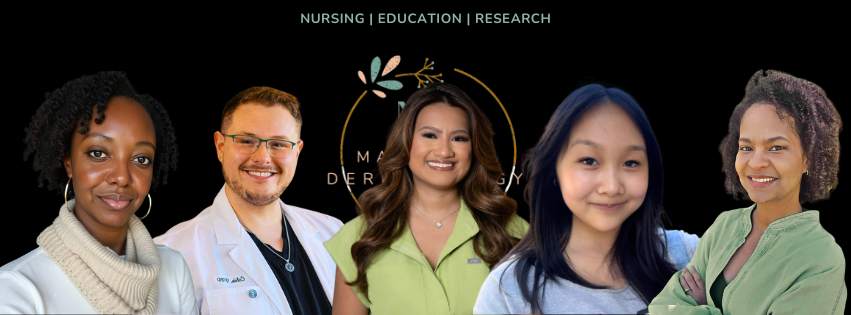
I am a dedicated dermatology professional with over a decade of experience as a Dermatology Medical Assistant, Registered Nurse, and Clinical Nurse Coordinator. Passionate about education and inclusivity in dermatology, I joined the Mahogany Dermatology Nursing | Education | Research™ Internship to expand my knowledge and contribute to the field I love. Through this blog, I aim to share my journey as a source of inspiration for those exploring nontraditional paths in dermatology. I’m excited to help create innovative educational resources and encourage others to discover their purpose in this dynamic specialty.
.svg)

.svg)
.svg)